Stepping into a home, does anything create a sense of welcoming warmth quite like a well-chosen ceiling fan? In 2026, the allure of farmhouse style continues to captivate homeowners, offering a perfect blend of rustic charm and modern functionality. These aren’t just practical appliances; they are statement pieces, designed to anchor your decor and enhance the lived-in elegance of your space. Whether you’re refreshing a cozy bedroom or updating an expansive living area, finding the right farmhouse ceiling fan can transform your home’s atmosphere, marrying efficient airflow with timeless aesthetic appeal.
What Are Ceiling Fans? An Overview of Their Evolution
A ceiling fan is a mechanical device fixed to a room’s ceiling, designed to circulate air using rotating blades. More than just a simple cooling solution, these fixtures combine air movement with decorative appeal, often including a light source, and can function year-round to improve comfort and energy efficiency.
The history of ceiling fans is marked by continuous innovation. From early belt-driven systems in the late 19th century to the electric models of the 20th century, fans have evolved dramatically. Today’s ceiling fans are a far cry from their predecessors, incorporating advanced technologies like energy-efficient LED lighting, smart controls, and whisper-quiet DC motors. This evolution has transformed them from purely utilitarian devices into integral components of interior design, offering both practical benefits and significant aesthetic value.
Modern farmhouse ceiling fans represent a thoughtful blend of rustic charm and solid engineering. They stand out with textures and character, often drawing inspiration from industrial fixtures, barn architecture, and classic country living. This style is defined by natural materials, aged metal finishes, and exposed hardware, creating a sense of comfortable, timeless elegance.
Advantages and Disadvantages of Ceiling Fans
Ceiling fans are a popular choice for home comfort, offering a blend of style and utility. However, like any home appliance, they come with their own set of pros and cons.
Advantages:
- Energy Efficiency: Compared to air conditioners, ceiling fans are significantly more energy-efficient, using only a fraction of the electricity. They can make a room feel cooler by circulating air, potentially allowing you to set your thermostat higher in summer and lower in winter, thus reducing heating and cooling costs.
- Enhanced Air Circulation: Fans improve air distribution, helping to circulate both cool air from air conditioners in summer and warm air during cooler months, contributing to a more comfortable indoor environment year-round.
- Aesthetic Appeal and Design Versatility: Modern ceiling fans, especially farmhouse styles, serve as stylish focal points that enhance a room’s decor. With distressed wood blades, weathered metal finishes, and vintage-inspired details, they add warmth and character.
- Dual Functionality: Many ceiling fans integrate light fixtures, providing both illumination and airflow from a single unit, saving space and contributing to the room’s ambiance.
- Cost-Effective: Ceiling fans are an affordable way to maintain a comfortable indoor temperature and can lead to lower electricity bills compared to continuous air conditioning use.
|
Our Picks for the Best Ceiling Fan in 2026
As an Amazon Associate I earn from qualifying purchases.
|
||
| Num | Product | Action |
|---|---|---|
| 1 | Ceiling Fans with Lights, 42 Inch Ceiling Fan with Light And Remote, 3CCT Flush Moun Low Profile Ceiling Fans, 6 Speed Noiseless LED Ceiling Fan, Black Ceilings Fan with Remote for Bedroom Living Room |

|
| 2 | 41" Black Low Profile Ceiling Fans with Lights and Remote, Modern Flush Mount Ceiling Fan Light with Quiet Reversible DC Motor for Bedroom Kitchen |
|
| 3 | ZMISHIBO 52 Inch Ceiling Fan with Light, App&Remote Control, Flush Mount Low Profile, Dimmable 20W LED Light, Quiet Reversible Motor for Bedroom, Living Room, Apartment, Black |
|
| 4 | OJX Ceiling Fans with Lights, 52 inch Ceiling fan with Light and Remote/APP Control, 3CCT, Quiet DC Reversible, Dimmable, Modern Ceiling Fan for Bedroom, Living Room, Kitchen, Indoor/Outdoor Use |
|
| 5 | 41 inch Ceiling Fans with Lights, Black Flush Mount Ceiling Fan with Remote, 3CCT, LED Dimmable, Reversible, 6 Fan Speeds, Quite Low Profile Ceiling Fan with Lights Modern Bedroom Kitchen Indoor |
|
| 6 | ZMISHIBO Ceiling Fans with Lights and Remote, 19.7'' Low Profile Ceiling Fan, 3000-6000K Dimmable Modern Flush Mount LED Fan Light, 6 Wind Speeds, Black Fandelier Ceiling Fans for Bedroom |
|
| 7 | Ceiling Fan with Light, 40" Black Flush Mount Ceiling Fans with Remote Control,3CCT Dimmable LED, ABS 5-Fan Blades,Reversible Motor,Quiet Low Profile Indoor fandeliers for Bedroom Living Room |
|
| 8 | Passky Ceiling Fans with Lights, 52 inch Sleek Ceiling Fan with Light and Remote Control, 3CCT, Dimmable, Reversible, Noiseless, Black Ceiling Fan for Bedroom, Living Room |
|
| 9 | Passky Ceiling Fans with Lights, 52 inch Flush Mount Ceiling fan with Remote Control, Low Profile Ceiling Fan for Bedroom, Farmhouse, Reversible, 3CCT, Dimmable, Noiseless DC Motor, Black |
|
| 10 | Amico Ceiling Fans with Lights, 42 inch Low Profile Ceiling fan with Light and Remote Control, Flush Mount, Reversible, 3CCT, Dimmable, Noiseless, Black Ceiling Fan for Bedroom, Indoor/Outdoor Use |
|
Disadvantages:
- Limited Cooling Power: Ceiling fans do not actually lower a room’s temperature; they create a wind-chill effect that makes occupants feel cooler. In extremely hot conditions, they may not provide sufficient cooling without supplementary air conditioning.
- Requires Regular Cleaning: Over time, fan blades accumulate dust, which can be dispersed into the room when the fan is operating. Regular cleaning is necessary to maintain efficiency and hygiene.
- Potential Noise: Depending on quality and installation, some ceiling fans can generate humming or rattling noises, which might be disruptive, particularly in quiet spaces like bedrooms.
- Ineffective for Large Rooms: In very large spaces, a single ceiling fan may struggle to circulate air effectively, potentially requiring multiple fans or additional cooling units to achieve desired comfort levels.
- Installation Challenges for High Ceilings: For homes with particularly high ceilings, installing and accessing ceiling fans for cleaning or maintenance can be challenging, often necessitating special tools or professional assistance.
- Takes Up Ceiling Space: While generally advantageous for floor space, a ceiling fan occupies a prominent position on the ceiling, which some minimalist aesthetics might avoid.
Popular Farmhouse Style Ceiling Fans on the Market
Farmhouse ceiling fans blend rustic materials with practical design, creating pieces that feel both lived-in and elegant. Here’s a look at some popular categories and the unique characteristics they offer.
Wood Blade Ceiling Fans
These fans often feature blades that mimic reclaimed or natural wood, ranging from light pine to rich walnut, adding organic texture and warmth to any room. The wood tones are a hallmark of farmhouse style, making these fans incredibly popular for creating a cozy, authentic ambiance.
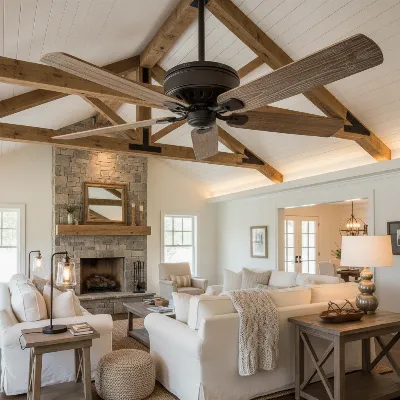 A rustic farmhouse ceiling fan with natural wood blades and a dark metal finish in a living room.
Metal Cage Ceiling Fans
Industrial chic meets rustic charm in metal cage designs. These fans feature a protective metal cage around the light kit, often inspired by old factory or barn lights. The caging adds a rugged, industrial contrast to the wood elements, making a strong style statement while also protecting the bulbs.
Lantern-Style Ceiling Fans
Incorporating lighting fixtures that evoke classic lanterns, these fans cast a warm, inviting glow reminiscent of a country evening. They are perfect for adding a touch of vintage history and warmth, often featuring multi-bulb candelabras or exposed Edison bulbs for a nostalgic feel.
Windmill Ceiling Fans
For a truly dramatic farmhouse statement, windmill-inspired fans feature multiple blades, often a dozen or more, to create a stunning silhouette. These are typically designed for larger, open-concept spaces with high ceilings, where they serve as both powerful air movers and captivating art pieces. Their robust, industrial feel makes them a focal point in any grand room.
Low-Profile (Hugger) Farmhouse Ceiling Fans
Ideal for rooms with lower ceilings (8 feet or less), hugger fans mount flush against the ceiling, providing efficient airflow without overwhelming the space or compromising headroom. Many farmhouse designs are available in this style, ensuring even smaller rooms can enjoy the rustic aesthetic.
Comparison Table of Popular Farmhouse Ceiling Fans
Choosing the right farmhouse ceiling fan involves balancing aesthetics with performance. Here’s a comparative look at some top models, highlighting their key features.
| Feature | Honeywell Carnegie Industrial Farmhouse LED | Portage Bay Hugger 52″ West Hill | Home Decorators Kensgrove LED | Minka-Aire Windmolen 65″ | Craftmade Sonnet 52″ |
|---|---|---|---|---|---|
| Blade Material | Rough Pine / Dark Chestnut | Manufactured Wood (Walnut / Chocolate Maple) | Not specified (Indoor/Outdoor rated) | Not specified (Wood-look blades) | Not specified (Classic look) |
| Design Style | Industrial Farmhouse, Wired Cage Light | Traditional, Classic | Classic, Contemporary, Modern | Windmill, Industrial | Classic, Traditional |
| Diameter | 52 inches | 52 inches | 72 inches | 65 inches | 52 inches |
| Control Type | Remote (wall mount included), No pull chain | Pull chains, Wired (dimmer compatible) | Remote, No pull chain | Remote | Not specified |
| Mounting Options | Standard, Angled | Ceiling mount (Hugger) | Standard, Flush, Angled | Standard | Not specified |
| Lights | Integrated dimmable LED, Wired cage | Frosted casing, single E26/A15 bulb | Integrated LED | LED Light Kit | Not specified |
| Motor | Reversible | Reversible | Reversible | Not specified | Not specified |
| Key Advantage | Versatile mounting, modern industrial look | Affordable, classic design, dimmer support | Massive airflow for large rooms, wet-rated | Dramatic statement, powerful airflow | Timeless elegance, cozy vibe |
| Approx. Price | $150 | $90-$125 | $234 | $1,060 | $318 |
How to Choose the Right Farmhouse Ceiling Fan
Selecting the perfect farmhouse ceiling fan is about more than just aesthetics; it’s about matching functionality with your unique space and needs. Here’s a guide to help you make an informed decision.
Determine Room Size and Purpose
The first step is to accurately measure your room’s square footage (length x width). This measurement is crucial for choosing the correct blade span, as an undersized fan won’t effectively circulate air, while an oversized one can create uncomfortable drafts.
- Small Rooms (Up to 75 sq. ft.): Laundry rooms, walk-in closets, or home offices benefit from a 29-36 inch blade span.
- Medium Rooms (76-175 sq. ft.): Most standard bedrooms and kitchens typically need a 36-48 inch blade span.
- Large Rooms (176-350 sq. ft.): Living rooms, master bedrooms, and dining areas usually require a 50-56 inch blade span.
- Extra-Large Spaces (Over 350 sq. ft.): Open-concept areas or great rooms may need a 60-inch or larger blade span, and sometimes, two strategically placed fans are the best solution.
Consider the room’s function. A bedroom might prioritize quiet operation and dimmable lighting, while a kitchen could benefit from brighter task lighting and powerful airflow to dissipate cooking odors.
Match Fan Style to Interior Design
Farmhouse style is versatile, blending rustic charm with modern elements. Look for fans featuring natural wood tones (like distressed oak or rich walnut), aged metal finishes (matte black, oil-rubbed bronze, weathered pewter), and exposed hardware.
- Modern Farmhouse: Opt for cleaner lines, simpler designs, and finishes like brushed nickel or crisp white alongside natural wood accents.
- Rustic Farmhouse: Embrace more traditional elements like caged fixtures, lantern styles, or multi-bulb candelabras with Edison bulbs for a vintage feel. Windmill fans are also a strong statement for this aesthetic.
The goal is for the fan to feel like an integrated part of your decor, harmonizing with existing hardware, furniture, and color palettes.
Consider Mounting Type and Ceiling Height
Ceiling height dictates the appropriate mounting option for optimal performance and safety.
- Standard Ceilings (8-9 feet): A 3-5 inch downrod, often included with the fan, is usually suitable. Flush-mount or “hugger” fans are also excellent for lower ceilings, maintaining ample headroom.
- High or Vaulted Ceilings (10+ feet): A longer downrod is essential to bring the fan blades down to an ideal height (8-9 feet from the floor) for effective air circulation.
- Sloped Ceilings: Most quality fans can accommodate slight slopes, but steeper angles may require a special sloped ceiling adapter to ensure the fan hangs level.
Ensure the electrical box in your ceiling is “fan-rated” to support the fan’s weight and motion, which is a critical safety consideration.
Evaluate Motor Type, Airflow, and Noise Levels
The motor is the heart of your fan, influencing its performance and efficiency.
- AC Motors (Alternating Current): These are traditional, reliable, and cost-effective, typically offering three speed settings. They may produce a slight humming noise.
- DC Motors (Direct Current): A significant technological advancement, DC motors are smaller, lighter, up to 70% more energy-efficient, and virtually silent. They offer more speed options (often six or more) and are typically controlled by a remote. While they have a higher initial cost, their long-term savings and quiet operation are substantial.
Airflow is measured in Cubic Feet per Minute (CFM); a higher CFM indicates more effective air movement. Look for Energy Star ratings, which certify fans to be significantly more energy-efficient than standard models, saving money and reducing environmental impact.
Check for Special Features
Modern farmhouse fans often include convenient features:
- Integrated LED Lighting: Many models come with built-in LED lights, offering energy efficiency and long lifespan. Consider color temperature (warm for ambiance, cool for task lighting) and dimmability for adjustable mood.
- Remote Controls/Smart Features: Remotes provide easy adjustment of fan speed, direction, and light settings. Some smart fans can integrate with home automation systems like Alexa or Google Assistant.
- Reversible Motor: This allows the blades to rotate clockwise in winter to gently push warm air down from the ceiling, and counterclockwise in summer to create a cooling downdraft.
- Damp- or Wet-Rated: If installing outdoors, choose a damp-rated fan for covered porches or screened patios (handles humidity) or a wet-rated fan for direct exposure to rain (weatherproof materials).
By carefully considering these factors, you can select a farmhouse ceiling fan that not only complements your home’s aesthetic but also provides optimal comfort and efficiency for years to come.
Top Farmhouse Style Ceiling Fans to Buy in 2026 (Review)
As we look to 2026, the market for farmhouse ceiling fans continues to offer exceptional designs that blend rustic charm with cutting-edge performance. Here are a few top contenders that embody the best of this popular style.
1. Honeywell Carnegie Industrial Farmhouse LED Ceiling Fan
The Honeywell Carnegie stands out as a top-rated choice, perfectly blending industrial and farmhouse aesthetics. With a 52-inch diameter, it’s suitable for medium-sized rooms and features a reversible motor for year-round comfort.
- Pros: Its industrial design, highlighted by a wired cage around the dimmable LED lights, adds a unique touch. Blades offer rough pine on one side and dark chestnut on the other, providing versatility. It supports standard and angled mounting.
- Cons: It lacks a pull chain, relying solely on a remote control, which might be a minor inconvenience for some.
- Price: Approximately $150.
- Overall: A versatile and stylish option for those seeking a robust industrial farmhouse look with modern conveniences.
2. Portage Bay Hugger 52″ West Hill
For budget-conscious shoppers, the Portage Bay Hugger 52″ West Hill offers classic looks without breaking the bank. This 52-inch fan is designed for moderately sized rooms up to 300 square feet.
- Pros: Its traditional design features brushed nickel paired with manufactured wood blades that are reversible (lighter walnut/darker chocolate maple). It includes a frosted light casing for a single E26/A15 bulb and pull chain controls with dimmer support. The hugger mount makes it ideal for lower ceilings.
- Cons: Does not include a remote control.
- Price: Approximately $90-$125.
- Overall: An excellent value pick for classic farmhouse aesthetics, especially for rooms with standard or low ceilings.
3. Home Decorators Collection Kensgrove LED Ceiling Fan
If you need powerful cooling for truly expansive spaces, the Home Decorators Collection Kensgrove LED is a formidable choice. This fan boasts a massive 72-inch blade size, capable of ventilating even the biggest rooms, and is wet-rated for both indoor and outdoor use.
- Pros: Its design fits classic, contemporary, and modern styles, offering significant versatility. The integrated LED light kit provides ample illumination, and it includes a remote for convenient control.
- Cons: Like the Honeywell Carnegie, it doesn’t have a pull chain. Its large size might be overwhelming for smaller spaces.
- Price: Approximately $234.
- Overall: An ideal solution for large living rooms, great rooms, or covered outdoor areas where powerful airflow and a statement design are desired.
4. Minka-Aire Windmolen 65″ Ceiling Fan
For those seeking a truly show-stopping piece, the Minka-Aire Windmolen is a masterclass in industrial farmhouse design. Its iconic windmill shape with twelve blades creates a dramatic statement and delivers exceptional airflow.
- Pros: The 65-inch span and distinctive design make it a focal point in any large, open-concept space with high ceilings. It embodies a rugged, powerful aesthetic.
- Cons: It comes with a premium price tag, making it an investment piece.
- Price: Approximately $1,060.
- Overall: This fan is a true work of art and engineering, perfect for grand spaces where you want to make a bold, unforgettable statement with a farmhouse twist.
5. Craftmade Sonnet 52″ Ceiling Fan
The Craftmade Sonnet offers a more classic, traditional farmhouse appeal, perfect for creating a cozy and welcoming ambiance. Its 52-inch diameter makes it suitable for medium to large rooms.
- Pros: Its timeless silhouette and beautiful finishes integrate seamlessly into a warm, inviting master bedroom or a comfortable living room. It focuses on refined elegance, aligning with a softer farmhouse aesthetic.
- Cons: Details on specific features like lighting and control type were not readily available in the browsed content, suggesting a more straightforward, classic offering.
- Price: Approximately $318.
- Overall: An excellent choice for a traditional farmhouse look that prioritizes timeless design and a comforting presence in your living space.
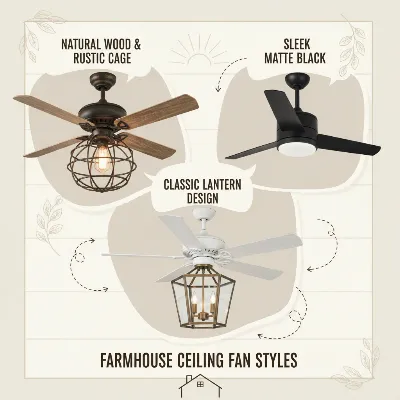 A diverse collection of farmhouse ceiling fans in various styles and finishes.
Installation and Maintenance Guide for Ceiling Fans
Proper installation and routine maintenance are crucial for ensuring your farmhouse ceiling fan operates safely, efficiently, and quietly for years to come.
Safe Installation Steps
Installing a ceiling fan, especially one designed to be a prominent decor element, requires careful attention to detail.
- Safety First: Always turn off the power at the circuit breaker before beginning any electrical work. Use a voltage tester to confirm that no electricity is flowing to the wires in the ceiling box.
- Gather Tools: Collect essential tools: a ladder, screwdrivers (Phillips and flathead), wire cutters/strippers, pliers, and electrical tape.
- Mounting Bracket: Secure the mounting bracket to the ceiling’s electrical box, ensuring it is fan-rated to support the weight and motion of the fan. A standard light fixture box is typically insufficient.
- Assemble the Fan: Follow the manufacturer’s instructions to assemble the fan, which usually involves attaching the downrod (if applicable) to the motor housing and threading wires through it.
- Hang and Wire: Lift the assembled fan and attach it to the mounting bracket. Connect the fan’s wires to the electrical supply in the ceiling box, matching black to black (hot), white to white (neutral), and green or bare copper to ground. Use wire nuts to secure connections.
- Attach Blades and Light Kit: Once the fan is securely wired and mounted, attach the blades, ensuring they are tightly fastened to prevent wobbling. If your fan has a light kit, connect its wires to the appropriate fan wires and secure the light kit to the fan body, installing any shades or globes.
- Final Checks and Testing: Make any necessary adjustments to balance the blades. Restore power at the circuit breaker and test all fan speeds and lighting functions. Look for unusual noises or flickering lights, which could indicate wiring issues.
If you are unsure about any step or if the wiring is complex, consulting a licensed electrician is highly advisable to ensure safety and proper installation.
Routine Cleaning and Maintenance
Regular upkeep is vital for extending your ceiling fan’s lifespan and maintaining its efficiency and quiet operation.
- Dust the Blades: Turn off the fan before cleaning. Use a microfiber cloth or duster to gently wipe both sides of the blades, paying special attention to the top where dust accumulates, as buildup can cause wobbling.
- Clean the Motor Housing: Wipe down the motor housing to remove dust, which helps prevent overheating and ensures efficient operation. For a more thorough cleaning, use compressed air to clear dust from inside the motor (after disconnecting power).
- Tighten Screws and Bolts: Periodically check and tighten all screws on the blades, light fixture, and mounting bracket. Vibrations can cause fasteners to loosen, leading to wobbling or rattling noises.
- Lubricate the Motor (if applicable): Some older or specific fan models require periodic oiling to reduce friction and noise. Refer to your fan’s manual to determine if lubrication is needed and what type of oil to use. Many modern fans have sealed, permanently lubricated bearings.
- Inspect Wiring and Light Fixture: Check all wire connections for tightness and ensure no exposed wires. For fans with light kits, confirm that all bulbs are securely screwed in and of the correct wattage to prevent flickering.
- Address Wobbling: If wobbling persists after tightening screws, measure the distance from each blade tip to the ceiling to ensure they are even. A blade balancing kit with adhesive weights can help correct imbalances.
By following this maintenance schedule a couple of times a year, your farmhouse ceiling fan will continue to be a safe, functional, and beautiful centerpiece in your home.
Where to Buy Farmhouse Ceiling Fans
Finding the perfect farmhouse ceiling fan means exploring a variety of reputable retailers, both online and in brick-and-mortar stores. Each offers a different selection, price range, and shopping experience.
- Large Home Improvement Stores: Retailers like Lowe’s and Home Depot offer a vast selection of farmhouse ceiling fans from various brands. These stores are convenient for in-person viewing and often provide installation services. You can find options from budget-friendly to more premium models.
- Online Marketplaces: Amazon and Walmart provide extensive online selections, often with competitive pricing and detailed customer reviews. These platforms are great for comparing different models and finding unique designs that might not be available locally.
- Specialty Fan and Lighting Retailers: Websites like Modern Fan Outlet, Lamps Plus, and Fan Connection specialize in ceiling fans and lighting fixtures. They often curate higher-quality, designer, or niche farmhouse styles and can offer expert advice. These retailers are ideal if you’re looking for unique designs or specific performance features.
- Brand Websites: Many well-known ceiling fan brands, such as Hunter Fan, Honeywell, Minka-Aire, and Craftmade, also sell directly from their websites. Shopping directly from the brand can provide access to their full catalog and specific warranty information.
When purchasing, always consider the retailer’s return policy, warranty offerings, and customer service reputation. Reading product reviews can also provide valuable insights into real-world performance and customer satisfaction.
Frequently Asked Questions
How do farmhouse ceiling fans save energy?
Farmhouse ceiling fans save energy by creating a wind-chill effect, making a room feel cooler without actually lowering the ambient temperature, thus allowing you to set your air conditioner thermostat higher. In cooler months, their reversible motors can push warm air down, reducing heating needs. Many models also feature energy-efficient LED lighting and DC motors, which consume significantly less electricity than traditional AC motors.
Can I install a farmhouse ceiling fan myself?
While confident DIYers can install a ceiling fan, it’s crucial to prioritize safety by ensuring the electrical box is fan-rated and turning off power at the circuit breaker. If you’re uncomfortable with electrical work, have high or sloped ceilings, or encounter complex wiring, it’s best to consult a licensed electrician for proper and safe installation.
What is the ideal height for a ceiling fan?
For optimal airflow and safety, a ceiling fan should ideally be mounted 8-9 feet from the floor. If you have higher ceilings (10+ feet), a longer downrod should be used to bring the fan to this optimal height. Ensure there’s at least 10 inches of clearance above the blades.
How do I stop my ceiling fan from wobbling?
To stop a ceiling fan from wobbling, first, ensure all blade screws and mounting bracket screws are tight. Check that blades are level and equidistant from the ceiling; uneven blades are a common cause of wobble. If wobbling persists, a blade balancing kit can be used to add small adhesive weights to the blades to achieve balance.
Are farmhouse ceiling fans suitable for outdoor use?
Yes, many farmhouse ceiling fans are designed for outdoor use, but it’s essential to choose a model with the correct rating. Damp-rated fans are suitable for covered outdoor areas like porches or screened patios, handling humidity and indirect moisture. Wet-rated fans are fully weatherproof and can withstand direct exposure to rain and other elements, making them ideal for pergolas or gazebos.
What are the main differences between AC and DC motor ceiling fans?
AC (Alternating Current) motors are the traditional standard, reliable and cost-effective, typically offering three speeds. DC (Direct Current) motors are a modern advancement, being smaller, lighter, up to 70% more energy-efficient, and virtually silent, often providing six or more speed options and controlled by a remote. While DC fans have a higher initial cost, their long-term energy savings and quiet operation are significant.
