Have you ever switched on your ceiling fan, only to be greeted by a flurry of dust bunnies raining down on your furniture and floor? It’s a common, frustrating scenario that often deters homeowners from tackling this essential cleaning chore. But what if you could banish that unsightly dust and allergens from your ceiling fan without creating an even bigger mess below? This guide will show you exactly how to clean a dusty ceiling fan with simple, DIY methods that keep the dust contained and your home spotless.
Keeping your ceiling fan blades clean is crucial for both indoor air quality and the fan’s efficiency. Dust accumulation isn’t just an aesthetic issue; it can circulate allergens, reduce airflow, and even cause your fan to wobble due to imbalanced blades. Neglecting this task allows a mix of dead skin cells, pet dander, textile fibers, and cooking residues to build up, ready to be redistributed throughout your living space the moment you hit the power switch. With the right techniques and a few common household items, you can maintain a healthier environment and prolong the life of your appliance, all while avoiding the typical post-cleaning chaos.
Understanding Your Ceiling Fan’s Anatomy for Effective Cleaning
Before diving into cleaning, it helps to understand the basic components of your ceiling fan. A typical ceiling fan consists of several key parts, each with its own cleaning considerations. The most obvious are the blades, which are the primary surfaces for dust collection. These can be made from wood, metal, plastic, or even fabric. Above the blades, the motor housing encases the fan’s operational components and can also accumulate dust and grime, though it should be cleaned with caution to avoid moisture. Many fans also feature light fixtures, which can gather dust inside and out, reducing illumination. Finally, the downrod connects the fan to the ceiling, and the canopy covers the electrical connections at the ceiling level; these parts typically require less intensive cleaning but can still benefit from a quick wipe. Identifying these areas will help you ensure a thorough and safe cleaning process, targeting dust where it tends to settle most.
Why Regular Ceiling Fan Cleaning is Essential
Regularly cleaning your ceiling fan goes beyond mere aesthetics; it plays a vital role in maintaining a healthy home environment and ensuring your fan operates at its best. Accumulated dust on fan blades can significantly impact indoor air quality by becoming airborne and circulating allergens like dust mites, pet dander, and pollen throughout your room. This can exacerbate allergy symptoms and respiratory issues for sensitive individuals.
Beyond health benefits, a clean ceiling fan performs more efficiently. Heavy dust buildup can unbalance the blades, leading to wobbling, increased noise, and greater strain on the motor. This imbalance forces the fan to work harder, consuming more energy and potentially shortening its lifespan. By investing a little time in routine cleaning, you not only improve air circulation and comfort but also protect your investment, keeping your fan running smoothly, quietly, and efficiently for years to come.
Common Methods for Mess-Free Ceiling Fan Cleaning
Tackling a dusty ceiling fan doesn’t have to be a dreaded chore that leaves your floor covered in debris. Several clever methods can help you contain the mess and achieve sparkling clean blades. Each technique offers unique advantages, depending on the level of dust and your preferred tools.
The Pillowcase Method
|
Our Picks for the Best Ceiling Fan in 2026
As an Amazon Associate I earn from qualifying purchases.
|
||
| Num | Product | Action |
|---|---|---|
| 1 | Passky Ceiling Fans with Lights, 52 inch Sleek Ceiling Fan with Light and Remote Control, 3CCT, Dimmable, Reversible, Noiseless, Black Ceiling Fan for Bedroom, Living Room |

|
| 2 | Ceiling Fans with Lights, 42 Inch Ceiling Fan with Light And Remote, 3CCT Flush Moun Low Profile Ceiling Fans, 6 Speed Noiseless LED Ceiling Fan, Black Ceilings Fan with Remote for Bedroom Living Room |
|
| 3 | Passky Ceiling Fans with Lights, 52 inch Flush Mount Ceiling fan with Remote Control, Low Profile Ceiling Fan for Bedroom, Farmhouse, Reversible, 3CCT, Dimmable, Noiseless DC Motor, Black |
|
| 4 | ZMISHIBO Ceiling Fans with Lights and Remote, 19.7'' Low Profile Ceiling Fan, 3000-6000K Dimmable Modern Flush Mount LED Fan Light, 6 Wind Speeds, Black Fandelier Ceiling Fans for Bedroom |
|
| 5 | ZMISHIBO 52 Inch Ceiling Fan with Light, App&Remote Control, Flush Mount Low Profile, Dimmable 20W LED Light, Quiet Reversible Motor for Bedroom, Living Room, Apartment, Black |
|
| 6 | OJX Ceiling Fans with Lights, 52 inch Ceiling fan with Light and Remote/APP Control, 3CCT, Quiet DC Reversible, Dimmable, Modern Ceiling Fan for Bedroom, Living Room, Kitchen, Indoor/Outdoor Use |
|
| 7 | Amico Ceiling Fans with Lights, 42 inch Low Profile Ceiling fan with Light and Remote Control, Flush Mount, Reversible, 3CCT, Dimmable, Noiseless, Black Ceiling Fan for Bedroom, Indoor/Outdoor Use |
|
| 8 | 41" Black Low Profile Ceiling Fans with Lights and Remote, Modern Flush Mount Ceiling Fan Light with Quiet Reversible DC Motor for Bedroom Kitchen |
|
| 9 | Ceiling Fan with Light, 40" Black Flush Mount Ceiling Fans with Remote Control,3CCT Dimmable LED, ABS 5-Fan Blades,Reversible Motor,Quiet Low Profile Indoor fandeliers for Bedroom Living Room |
|
| 10 | 41 inch Ceiling Fans with Lights, Black Flush Mount Ceiling Fan with Remote, 3CCT, LED Dimmable, Reversible, 6 Fan Speeds, Quite Low Profile Ceiling Fan with Lights Modern Bedroom Kitchen Indoor |
|
The pillowcase method is often hailed as the ultimate mess-free solution for cleaning ceiling fan blades. It’s incredibly simple and effective. You’ll need an old pillowcase, preferably one you don’t mind getting dirty. The magic of this technique lies in its ability to trap dust inside the fabric as you wipe, preventing it from scattering across your room. It’s particularly effective for moderate to heavy dust accumulation.
Duster with a Drop Cloth Method
While not as perfectly mess-free as the pillowcase, using a long-handled duster in conjunction with a drop cloth is a viable option, especially for lighter dust or for those who prefer to keep their distance. A microfiber duster with an extendable pole can reach high fans. The crucial element here is placing a drop cloth or old sheet directly underneath the fan to catch any dust that inevitably falls. This method is quicker for routine touch-ups but requires more cleanup of the cloth afterwards.
Vacuum Cleaner Attachment Method
For heavily caked-on dust, a vacuum cleaner with a soft brush or dusting attachment can be a powerful ally. This method directly suctions the dust, minimizing airborne particles. It’s an excellent choice for allergy sufferers. You’ll need a sturdy ladder to reach the blades safely, holding the vacuum attachment close to the surface as you run it along each blade. Ensure the fan is completely off and stationary before beginning.
Wet Cloth and Bucket Method
For stubborn grime or sticky residue that dry dusting can’t conquer, a wet cloth paired with a mild cleaning solution works wonders. While this method carries a slightly higher risk of drips, it provides a deep clean. Prepare a bucket with warm water and a small amount of dish soap or a 50/50 mixture of water and white vinegar. Lightly dampen a microfiber cloth, wipe each blade carefully, and then follow up with a dry cloth to remove any moisture and prevent streaks. Always ensure not to oversaturate the cloth, especially near the motor housing.
Comparing Cleaning Tools and Techniques
Choosing the right tool and technique for cleaning your ceiling fan can make all the difference in efficiency and mess reduction. Here’s a comparison to help you decide which approach best suits your needs and the condition of your fan:
| Method | Tools Needed | Effectiveness | Mess Level | Time Required | Best For |
|---|---|---|---|---|---|
| Pillowcase | Old pillowcase, sturdy ladder | High (dust containment) | Very Low | Moderate | Heavy dust, avoiding mess, allergy sufferers |
| Duster & Drop Cloth | Extendable duster, drop cloth, sturdy ladder | Medium (light dust) | Moderate | Low | Routine light cleaning, quick touch-ups |
| Vacuum Attachment | Vacuum with brush attachment, sturdy ladder | High (suction) | Low | Moderate | Heavy dust, allergy sufferers, deep cleaning |
| Wet Cloth & Solution | Microfiber cloths, bucket, mild cleaner, ladder | High (grime removal) | Moderate | High | Stubborn grime, sticky residue, deep cleaning |
Each method offers distinct advantages, allowing you to select the most appropriate strategy based on your fan’s condition and your personal preferences for cleaning. The pillowcase and vacuum methods excel at containing dust, while a wet cloth provides a thorough wash for stickier buildup.
Step-by-Step Guide to a Spotless, Mess-Free Ceiling Fan
Achieving a perfectly clean ceiling fan without a dust storm is entirely possible with a systematic approach. This guide focuses on the highly effective pillowcase method, complemented by tips for cleaning other fan components and maintaining overall cleanliness.
Safety First: Preparing for Cleaning
Before you even think about touching your ceiling fan, prioritize safety. First, turn off the power to the fan at the wall switch, and ideally, at the circuit breaker. This prevents accidental activation while you’re working. Next, gather your supplies: an old pillowcase, a sturdy step ladder or stool, and perhaps a damp microfiber cloth for follow-up. Position your ladder securely directly beneath the fan, ensuring all legs are stable on a flat surface. Never stretch or overreach; if you can’t comfortably reach the blades, reposition the ladder.
The Pillowcase Technique Explained
With safety established, grab your old pillowcase. Climb your ladder, bringing the pillowcase with you. Carefully slip the pillowcase over one fan blade, ensuring it fully encases both the top and bottom surfaces. Gently apply a slight downward pressure as you slowly pull the pillowcase back towards the motor housing. This action effectively scrapes the dust off the blade, trapping it inside the pillowcase. Once the blade is clean, carefully remove the pillowcase, keeping it folded to contain the dust. Repeat this process for each blade, shaking out the dust from the pillowcase outdoors when all blades are done, then wash the pillowcase.
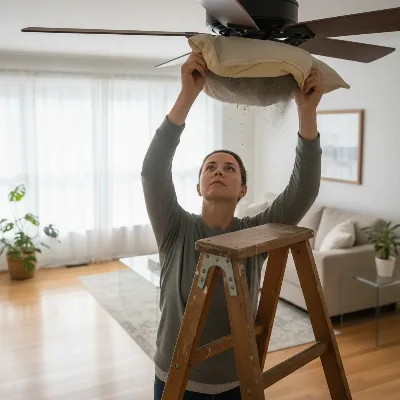 A person using the pillowcase method to clean a dusty ceiling fan blade without mess
Cleaning the Motor Housing and Light Fixtures
After the blades are spotless, turn your attention to the rest of the fan. For the motor housing, use a dry microfiber cloth to wipe away any accumulated dust. If your fan has light fixtures, carefully wipe the bulbs and any glass shades. If the shades are removable, take them down and wash them in warm, soapy water, then dry them thoroughly before reattaching. Be cautious not to get any moisture into the electrical components of the motor housing.
Post-Cleaning Polish and Maintenance Tips
Once all components are clean, you can use a clean, dry microfiber cloth to give the blades a final polish. For an added layer of dust resistance, some experts suggest wiping the blades with an anti-static spray, though this is optional. After cleaning, carefully descend the ladder, remove it from the area, and restore power to the fan. Turn it on to a low setting and observe its operation. Check for any wobbling; if present, ensure all blade screws are tightened. Regular, light dusting with a duster (perhaps every few weeks) can prevent heavy buildup and make your next deep clean much easier.
Top Tips for Preventing Dust Buildup
Preventing heavy dust accumulation on your ceiling fan is more effective than constantly performing deep cleans. By incorporating a few simple habits into your routine, you can significantly reduce the amount of dust that settles on the blades and other components, keeping your fan cleaner for longer.
One of the easiest ways to combat dust is through regular, light dusting. Use an extendable duster with a microfiber head once every week or two to quickly swipe the tops and bottoms of the blades. This prevents the formation of thick, caked-on layers that are much harder to remove. Additionally, ensure your home’s air filters are changed regularly. A clean HVAC filter traps more airborne dust, preventing it from circulating and settling on surfaces, including your ceiling fan.
Consider running a humidifier during dry months. While it might seem counterintuitive, adequate humidity can help dust particles settle rather than remain airborne, making them easier to clean from surfaces like floors, reducing the amount that ends up on your fan. Finally, if your fan is exposed to cooking grease or smoke, an occasional wipe with a slightly damp cloth (using a very mild degreaser if needed) can prevent sticky residue from accumulating, which acts as a magnet for dust. By taking these proactive steps, you’ll find your ceiling fan stays cleaner, reducing the frequency of intensive cleaning sessions.
Troubleshooting Common Ceiling Fan Cleaning Challenges
Even with the best techniques, you might encounter a few hiccups when cleaning your ceiling fan. Knowing how to address these common challenges can make the process smoother and more effective.
One frequent issue is difficulty reaching high fans. If your ceiling fan is exceptionally high, a standard step ladder might not be sufficient. In such cases, a taller extension ladder or scaffolding might be necessary. Always prioritize safety; if you feel unstable, it’s safer to hire a professional cleaner. Another challenge is heavily caked-on or greasy dust. The pillowcase method might not fully remove this stubborn grime. For such situations, pre-treating the blades with a gentle all-purpose cleaner or a mixture of white vinegar and water applied with a spray bottle and left to soak for a few minutes can loosen the buildup before wiping. Always test a small, inconspicuous area first to ensure no damage to the blade finish.
Wobbling after cleaning is another concern. This usually occurs if the blades are accidentally bent or if the screws holding the blades to the motor housing become loose. After cleaning, visually inspect the blades for any bends. If a blade appears bent, gently try to straighten it. Also, check and tighten all screws on the blade arms. If wobbling persists, a fan balancing kit, available at most hardware stores, can resolve the issue by adding small weights to balance the blades. Finally, scratches or damage to blade finishes can occur with abrasive cleaners or cloths. Always use soft microfiber cloths and non-abrasive cleaning solutions. If your fan has delicate finishes, opt for plain water or a very mild soap solution.
Essential Cleaning Supplies You’ll Need
To effectively clean your ceiling fan without creating a mess, having the right supplies on hand is crucial. Most of these items are common household staples, making DIY cleaning both convenient and cost-effective.
At the top of the list is a sturdy step ladder or stable stool. Safety is paramount, so ensure your chosen climbing aid is appropriate for the height of your fan and placed on a flat, stable surface. Next, you’ll need an old pillowcase. This is the star of the mess-free cleaning show, designed to trap dust inside as you wipe each blade. For stubborn spots or grime, a couple of microfiber cloths are indispensable. One can be slightly dampened with a cleaning solution, and another kept dry for wiping away moisture and polishing.
For cleaning solutions, a simple mixture of warm water and a few drops of mild dish soap, or a 50/50 solution of white vinegar and water, works exceptionally well for general dirt and light grease. Avoid harsh chemicals that could damage fan finishes. If you opt for the duster method, an extendable duster with a microfiber head will be helpful. Finally, if you’re dealing with very heavy dust, a vacuum cleaner with a brush attachment can be a great asset. Having these supplies ready will streamline your cleaning process and ensure a thorough, mess-free result.
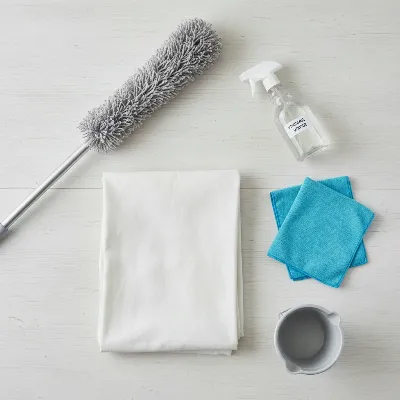 Various cleaning tools for a mess-free ceiling fan cleaning process arranged neatly
“The secret to a truly clean home isn’t just about cleaning often, but cleaning smartly. The pillowcase method for ceiling fans isn’t just a hack; it’s a testament to efficient, mess-free cleaning that every homeowner should embrace.” – Eleanor Vance, Professional Home Organizer
Conclusion
Cleaning a dusty ceiling fan no longer has to be a chore that leaves your room shrouded in a cloud of debris. By embracing simple yet effective DIY techniques, particularly the revolutionary pillowcase method, you can achieve a spotless ceiling fan and significantly improve your indoor air quality. Remember to prioritize safety by turning off the power and using a stable ladder, and always use gentle cleaning solutions to protect your fan’s finish. Regular maintenance and a proactive approach to dust prevention will keep your fan running efficiently and your home healthier.
What simple cleaning hacks have you discovered that make household chores surprisingly mess-free?
