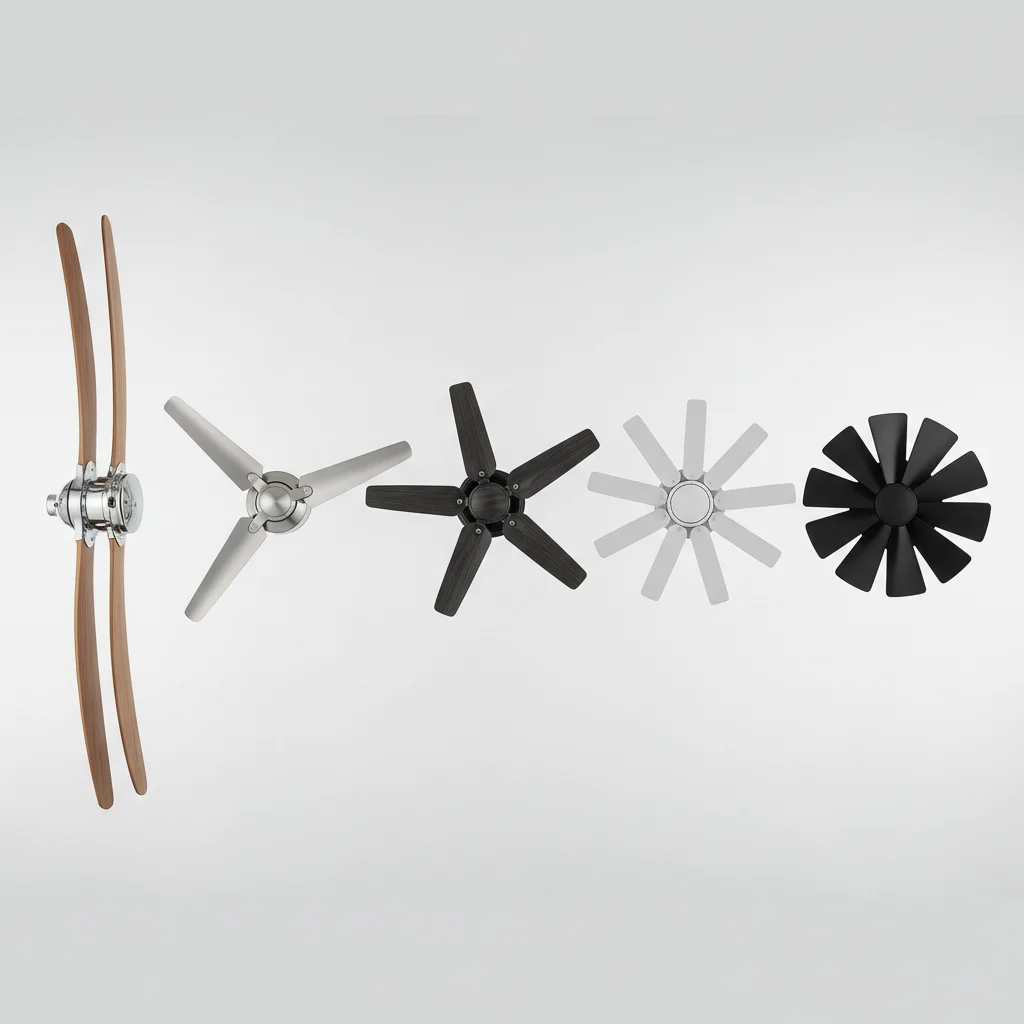
The ideal number of ceiling fan blades for optimal airflow is typically five. While fans with fewer blades (three or four) can move air efficiently, a five-blade configuration often strikes the best balance between air movement, quiet operation, and aesthetic appeal for most residential settings. This setup provides a consistent and powerful breeze without excessive noise, making it a popular choice for bedrooms and living rooms.
Understanding Blade Count and Air Movement
The number of blades on a ceiling fan directly influences its performance. Fans with fewer blades, such as three-blade models, are often designed for high-speed rotation and can move a significant volume of air. These are frequently found in industrial or modern minimalist designs where raw power is prioritized. However, fewer blades can sometimes lead to more noise due to the increased air turbulence and motor strain required to achieve high airflow.
Conversely, fans with more blades, like five or even six-blade models, tend to operate more quietly. The increased surface area of the blades allows for a smoother, more even distribution of air at lower RPMs. This makes them ideal for spaces where noise reduction is crucial, such as bedrooms or home offices. While they might not always match the sheer velocity of a three-blade fan, they often provide a more comfortable and consistent breeze.
Factors Influencing Blade Choice
When selecting a ceiling fan based on blade count, several factors should be considered beyond just airflow. The size of the room is paramount; larger rooms may benefit from fans with more blades to ensure adequate air circulation across the entire space. Ceiling height also plays a role; fans in rooms with lower ceilings might benefit from fewer, more efficient blades to avoid a bulky appearance.
Aesthetic preferences are also significant. Modern and contemporary designs often feature three or four blades for a sleek, minimalist look, while traditional or transitional styles frequently incorporate five or more blades for a classic appearance. The material and pitch of the blades also contribute to overall performance, with steeper pitches generally moving more air.
The Impact of Blade Pitch and Material
|
Our Picks for the Best Ceiling Fan in 2026
As an Amazon Associate I earn from qualifying purchases.
|
||
| Num | Product | Action |
|---|---|---|
| 1 | Passky Ceiling Fans with Lights, 52 inch Flush Mount Ceiling fan with Remote Control, Low Profile Ceiling Fan for Bedroom, Farmhouse, Reversible, 3CCT, Dimmable, Noiseless DC Motor, Black |

|
| 2 | Ceiling Fan with Light, 40" Black Flush Mount Ceiling Fans with Remote Control,3CCT Dimmable LED, ABS 5-Fan Blades,Reversible Motor,Quiet Low Profile Indoor fandeliers for Bedroom Living Room |
|
| 3 | 41" Black Low Profile Ceiling Fans with Lights and Remote, Modern Flush Mount Ceiling Fan Light with Quiet Reversible DC Motor for Bedroom Kitchen |
|
| 4 | OJX Ceiling Fans with Lights, 52 inch Ceiling fan with Light and Remote/APP Control, 3CCT, Quiet DC Reversible, Dimmable, Modern Ceiling Fan for Bedroom, Living Room, Kitchen, Indoor/Outdoor Use |
|
| 5 | Ceiling Fans with Lights, 42 Inch Ceiling Fan with Light And Remote, 3CCT Flush Moun Low Profile Ceiling Fans, 6 Speed Noiseless LED Ceiling Fan, Black Ceilings Fan with Remote for Bedroom Living Room |
|
| 6 | 41 inch Ceiling Fans with Lights, Black Flush Mount Ceiling Fan with Remote, 3CCT, LED Dimmable, Reversible, 6 Fan Speeds, Quite Low Profile Ceiling Fan with Lights Modern Bedroom Kitchen Indoor |
|
| 7 | ZMISHIBO Ceiling Fans with Lights and Remote, 19.7'' Low Profile Ceiling Fan, 3000-6000K Dimmable Modern Flush Mount LED Fan Light, 6 Wind Speeds, Black Fandelier Ceiling Fans for Bedroom |
|
| 8 | Passky Ceiling Fans with Lights, 52 inch Sleek Ceiling Fan with Light and Remote Control, 3CCT, Dimmable, Reversible, Noiseless, Black Ceiling Fan for Bedroom, Living Room |
|
| 9 | ZMISHIBO 52 Inch Ceiling Fan with Light, App&Remote Control, Flush Mount Low Profile, Dimmable 20W LED Light, Quiet Reversible Motor for Bedroom, Living Room, Apartment, Black |
|
| 10 | Amico Ceiling Fans with Lights, 42 inch Low Profile Ceiling fan with Light and Remote Control, Flush Mount, Reversible, 3CCT, Dimmable, Noiseless, Black Ceiling Fan for Bedroom, Indoor/Outdoor Use |
|
Beyond the sheer number of blades, the pitch (angle) and material of the blades are critical to a fan’s efficiency. A steeper blade pitch can move more air per rotation, but it also requires a more powerful motor to maintain speed, potentially increasing energy consumption and noise. Conversely, a shallower pitch might be quieter but less effective at circulating air.
Blade materials also vary widely, from lightweight plastics and composites to wood and metal. Lighter materials can be spun more easily, requiring less motor power, while heavier materials might offer greater durability and a more substantial feel. The combination of blade count, pitch, and material ultimately determines the fan’s overall performance and suitability for different environments.
- Three Blades: Often found in modern designs, high airflow at higher speeds, can be noisier.
- Four Blades: Good balance of airflow and aesthetics, common in many residential settings.
- Five Blades: Excellent for quiet operation and consistent airflow, widely popular for comfort.
- Six Blades: Very quiet, often used in larger rooms or for a more traditional look, can be less powerful.
Optimizing Fan Performance
To get the best performance from your ceiling fan, consider the room’s specific needs. For a bedroom where quiet operation is key, a five-blade fan with a moderate pitch is often the best choice. In a living room or family room, a four or five-blade fan can provide ample air movement without being intrusive. For outdoor spaces, specialized blades designed to withstand moisture and temperature fluctuations are essential.
Regular cleaning of the blades also ensures optimal performance. Dust and debris can accumulate, adding weight and disrupting the aerodynamic efficiency of the blades, leading to reduced airflow and increased motor strain. Always ensure the fan is installed correctly and balanced to prevent wobbling and maximize its lifespan.
Choosing the Right Fan for Your Home
Ultimately, the “best” number of ceiling fan blades depends on your specific priorities: airflow, noise level, energy efficiency, and aesthetic appeal. For most homeowners seeking a balance of comfort and quiet, a five-blade fan is a reliable choice. If maximum air movement is the goal, a three-blade fan might be preferred, provided noise is not a significant concern. For larger rooms or those prioritizing silence, six-blade options are available. Always check the fan’s CFM (Cubic Feet per Minute) rating to understand its air-moving capability.
Frequently Asked Questions
What is the best number of blades for a ceiling fan?
The best number of blades for a ceiling fan is typically five. This configuration provides an optimal balance of effective air movement, quiet operation, and aesthetic appeal for most residential spaces, delivering a consistent breeze without excessive noise.
Do more ceiling fan blades mean better airflow?
Not necessarily. While more blades (five or six) often result in quieter operation and smoother air distribution at lower RPMs, fans with fewer blades (three) can move a significant volume of air at higher speeds. The overall performance depends on blade pitch, material, and motor power.
How do blade pitch and material affect ceiling fan performance?
Blade pitch (angle) and material significantly impact performance. A steeper pitch moves more air but requires a more powerful motor, potentially increasing noise and energy use. Lighter blade materials, such as plastic, require less motor power, while heavier materials like wood offer durability.
Are three-blade ceiling fans noisier than five-blade fans?
Yes, three-blade ceiling fans can often be noisier than five-blade fans. This is because fewer blades typically require higher rotation speeds and greater motor strain to achieve significant airflow, leading to increased air turbulence and operational noise.
What factors should I consider when choosing ceiling fan blades?
When choosing ceiling fan blades, consider room size, ceiling height, aesthetic preferences, and desired noise level. Larger rooms may benefit from more blades, while lower ceilings might suit fewer, more efficient blades. Also, check the fan's CFM rating for its air-moving capability.

I picked up a three-blade fan for my home office, thinking the modern minimalist design would look good. While it does move a lot of air, it’s definitely louder than I expected, especially on higher settings. I probably should have gone with a five-blade model for a quieter experience, as the post mentioned fewer blades can sometimes lead to more noise.
I always thought more blades meant better air, but after reading about the five-blade configuration, I decided to try it for our living room. It’s been fantastic! The breeze is consistent and powerful, and it’s surprisingly quiet. Definitely a great choice for a main living area where you want comfort without a lot of noise.
I was debating between a four-blade and a five-blade fan for our master bedroom. The explanation about how five blades strike the best balance for residential settings convinced me. It looks great, and the airflow is perfect for keeping the room cool and comfortable all night. No regrets at all!
We just replaced an old, noisy fan in our bedroom with a new one. I specifically looked for a fan that balanced air movement and quiet operation, and the recommendation for five blades really helped. It’s made a huge difference for sleeping; the air circulates well without that annoying hum. Very happy with the upgrade.