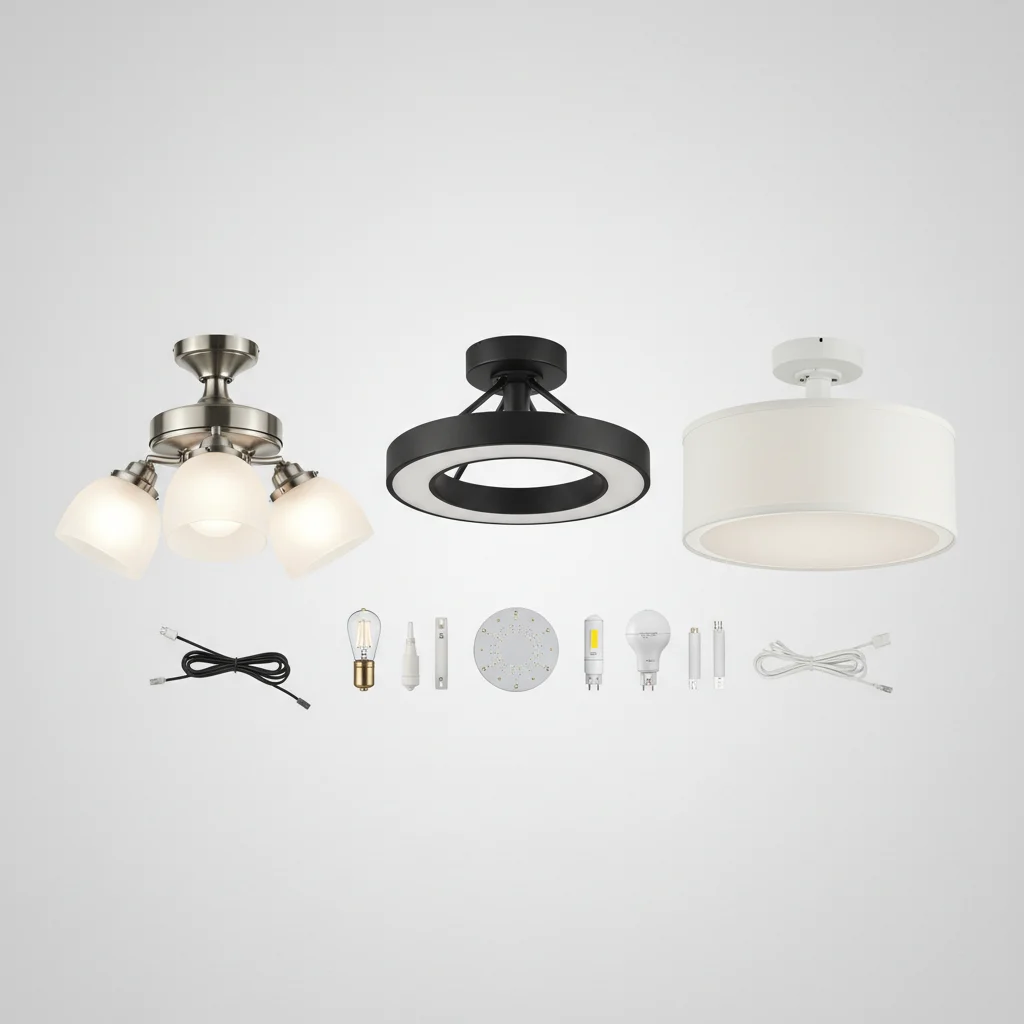
Choosing the right brightness for your ceiling fan light kit involves understanding lumens, color temperature, and the size of your room. For adequate ambient lighting, a living room or bedroom typically requires 1,500 to 3,000 lumens, while smaller spaces like hallways need 800 to 1,500 lumens. The goal is to achieve comfortable and functional illumination without being too harsh or too dim, ensuring a pleasant atmosphere in any space.
Understanding Lumens and Watts
When selecting a light kit, focus on lumens rather than watts. Lumens measure the actual brightness of a light source, whereas watts indicate energy consumption. For example, an old 60-watt incandescent bulb produces about 800 lumens, while a modern LED bulb can achieve the same brightness with only 9-12 watts. Always check the lumen output listed on the packaging to ensure it meets your room’s requirements. A good rule of thumb is to aim for 20 lumens per square foot for general ambient lighting.
Consider the primary function of the room. A kitchen or home office might benefit from higher lumen output for task lighting, perhaps 3,000-5,000 lumens, while a bedroom might prefer a softer 1,500-2,500 lumens. Many modern ceiling fan light kits come with integrated LED arrays, offering excellent energy efficiency and often dimmable options.
Color Temperature Explained
Color temperature, measured in Kelvin (K), describes the warmth or coolness of the light. Lower Kelvin numbers (2700K-3000K) produce a warm, yellowish light, similar to traditional incandescent bulbs, which is ideal for creating a cozy and relaxing atmosphere in bedrooms and living rooms. Higher Kelvin numbers (4000K-5000K) emit a cooler, bluer light, often referred to as “daylight,” which is more suitable for task-oriented areas like kitchens, home offices, or workshops where clarity and alertness are desired.
Some advanced ceiling fan light kits offer adjustable color temperature, allowing you to switch between warm and cool light settings depending on the time of day or your activity. This flexibility can significantly enhance the usability and comfort of your space.
Dimming Capabilities and Controls
|
Our Picks for the Best Ceiling Fan in 2026
As an Amazon Associate I earn from qualifying purchases.
|
||
| Num | Product | Action |
|---|---|---|
| 1 | ZMISHIBO Ceiling Fans with Lights and Remote, 19.7'' Low Profile Ceiling Fan, 3000-6000K Dimmable Modern Flush Mount LED Fan Light, 6 Wind Speeds, Black Fandelier Ceiling Fans for Bedroom |

|
| 2 | Ceiling Fans with Lights, 42 Inch Ceiling Fan with Light And Remote, 3CCT Flush Moun Low Profile Ceiling Fans, 6 Speed Noiseless LED Ceiling Fan, Black Ceilings Fan with Remote for Bedroom Living Room |
|
| 3 | 41" Black Low Profile Ceiling Fans with Lights and Remote, Modern Flush Mount Ceiling Fan Light with Quiet Reversible DC Motor for Bedroom Kitchen |
|
| 4 | ZMISHIBO 52 Inch Ceiling Fan with Light, App&Remote Control, Flush Mount Low Profile, Dimmable 20W LED Light, Quiet Reversible Motor for Bedroom, Living Room, Apartment, Black |
|
| 5 | Passky Ceiling Fans with Lights, 52 inch Flush Mount Ceiling fan with Remote Control, Low Profile Ceiling Fan for Bedroom, Farmhouse, Reversible, 3CCT, Dimmable, Noiseless DC Motor, Black |
|
| 6 | Amico Ceiling Fans with Lights, 42 inch Low Profile Ceiling fan with Light and Remote Control, Flush Mount, Reversible, 3CCT, Dimmable, Noiseless, Black Ceiling Fan for Bedroom, Indoor/Outdoor Use |
|
| 7 | OJX Ceiling Fans with Lights, 52 inch Ceiling fan with Light and Remote/APP Control, 3CCT, Quiet DC Reversible, Dimmable, Modern Ceiling Fan for Bedroom, Living Room, Kitchen, Indoor/Outdoor Use |
|
| 8 | Ceiling Fan with Light, 40" Black Flush Mount Ceiling Fans with Remote Control,3CCT Dimmable LED, ABS 5-Fan Blades,Reversible Motor,Quiet Low Profile Indoor fandeliers for Bedroom Living Room |
|
| 9 | 41 inch Ceiling Fans with Lights, Black Flush Mount Ceiling Fan with Remote, 3CCT, LED Dimmable, Reversible, 6 Fan Speeds, Quite Low Profile Ceiling Fan with Lights Modern Bedroom Kitchen Indoor |
|
| 10 | Passky Ceiling Fans with Lights, 52 inch Sleek Ceiling Fan with Light and Remote Control, 3CCT, Dimmable, Reversible, Noiseless, Black Ceiling Fan for Bedroom, Living Room |
|
The ability to dim your ceiling fan light kit is a crucial feature for versatility and ambiance control. Dimmable lights allow you to adjust the brightness to suit various moods and activities, from bright illumination for reading to a soft glow for relaxation. Ensure that both the light kit and your wall switch or remote control are compatible with dimming functionality. Not all LED lights are dimmable, so check the product specifications carefully.
Many ceiling fan remotes now include dedicated buttons for light dimming, offering convenient control from anywhere in the room. If you’re replacing an existing light kit, verify that your current wiring and switch can support the new kit’s dimming requirements to avoid flickering or damage.
Installation and Compatibility
Before purchasing a new light kit, confirm its compatibility with your existing ceiling fan. Most light kits are designed to fit specific fan models or brands. Check the fan’s manual or manufacturer’s website for compatible accessories. Key factors include the mounting mechanism, wiring connections, and the overall aesthetic design to ensure a seamless integration. Some universal light kits are available, but they may not offer the same level of fit and finish as a model-specific accessory.
- Verify the voltage requirements of the light kit match your home’s electrical system.
- Ensure the light kit’s diameter and depth are appropriate for your fan’s housing.
- Check for any specific wiring harnesses or connectors required for installation.
- Consider the overall weight of the light kit to ensure your fan can support it.
- Review user manuals for detailed installation instructions and safety precautions.
Energy Efficiency and Bulb Type
Modern ceiling fan light kits predominantly use LED technology due to its superior energy efficiency and longevity. LEDs consume significantly less power than incandescent or halogen bulbs and can last for tens of thousands of hours, reducing the need for frequent bulb replacements. When choosing an LED light kit, look for Energy Star certification, which indicates high efficiency and quality.
While some older kits might still use CFLs or even incandescent bulbs, upgrading to an LED kit is almost always a wise investment for long-term savings on electricity bills and reduced maintenance. Integrated LED light kits often offer a sleeker profile and better light distribution compared to kits that use replaceable bulbs.
Frequently Asked Questions
How many lumens do I need for a ceiling fan light in a living room?
For a living room or bedroom, you generally need between 1,500 to 3,000 lumens for adequate ambient lighting. This range helps create a comfortable and functional illumination without being too harsh or too dim.
What is the difference between lumens and watts for ceiling fan lights?
Lumens measure the actual brightness of a light source, while watts indicate energy consumption. For example, a modern LED bulb can produce 800 lumens with only 9-12 watts, whereas an old 60-watt incandescent bulb produced the same brightness.
Which color temperature is best for a kitchen ceiling fan light?
For a kitchen or home office, a cooler color temperature of 4000K-5000K (daylight) is generally best. This type of light promotes clarity and alertness, making it suitable for task-oriented areas.
Are all LED ceiling fan light kits dimmable?
No, not all LED ceiling fan light kits are dimmable. It is crucial to check the product specifications carefully to ensure that both the light kit and your wall switch or remote control are compatible with dimming functionality.
Why should I choose an LED light kit for my ceiling fan?
LED light kits are highly recommended due to their superior energy efficiency and longevity. They consume significantly less power than incandescent or halogen bulbs and can last for tens of thousands of hours, leading to long-term savings on electricity bills and reduced maintenance.
How to Choose the Right Ceiling Fan Light Kit Brightness
Selecting the appropriate brightness for your ceiling fan light kit involves considering room size, desired ambiance, and light specifications like lumens and color temperature.
Calculate the required lumen output based on your room's size and function. Aim for approximately 20 lumens per square foot for general ambient lighting. Living rooms typically need 1,500-3,000 lumens, while kitchens might require 3,000-5,000 lumens for task lighting.
Choose a color temperature (Kelvin) that matches the room's purpose. For cozy spaces like bedrooms, opt for warm light (2700K-3000K). For task-oriented areas like kitchens, select cooler daylight (4000K-5000K) for better clarity.
Look for light kits with dimming functionality to adjust brightness for various activities and moods. Ensure both the light kit and your control system (wall switch or remote) are compatible with dimming to avoid issues like flickering.
Before purchasing, confirm the light kit's compatibility with your existing ceiling fan model. Check the fan's manual for specific mounting mechanisms, wiring connections, and voltage requirements to ensure a seamless and safe installation.
Opt for LED technology due to its superior energy efficiency and longevity. LED kits consume less power and last longer than traditional bulbs, offering significant long-term savings and reduced maintenance. Look for Energy Star certification for high-quality options.

This guide was exactly what I needed! I was so confused about choosing a light kit for my new ceiling fan. The explanation of how lumens relate to room size, especially for bedrooms, helped me confidently select a kit that provides comfortable and functional illumination. No more guessing games with brightness!
I always focused on watts, so learning to prioritize lumens was a real eye-opener. It makes so much sense now why some ‘bright’ bulbs felt dim and others were blinding. My hallway fan needed a new light, and knowing that 800 to 1,500 lumens is good for smaller spaces helped me pick the perfect one. It’s much more energy-efficient too!
The info about color temperature was helpful, but I wish there was more guidance on specific brands. I ended up with a light kit that’s a bit too cool for my bedroom, even though the lumens are fine for the size of the room. It’s not terrible, but I was hoping for a warmer glow. Next time I’ll pay closer attention to the Kelvin scale.
I’m so glad I read up on lumens before buying my new ceiling fan light kit! I used to just grab whatever, but understanding that 1,500 to 3,000 lumens is ideal for a living room made a huge difference. Our new fan light is perfectly bright without being overwhelming. It really transformed the feel of the whole space.