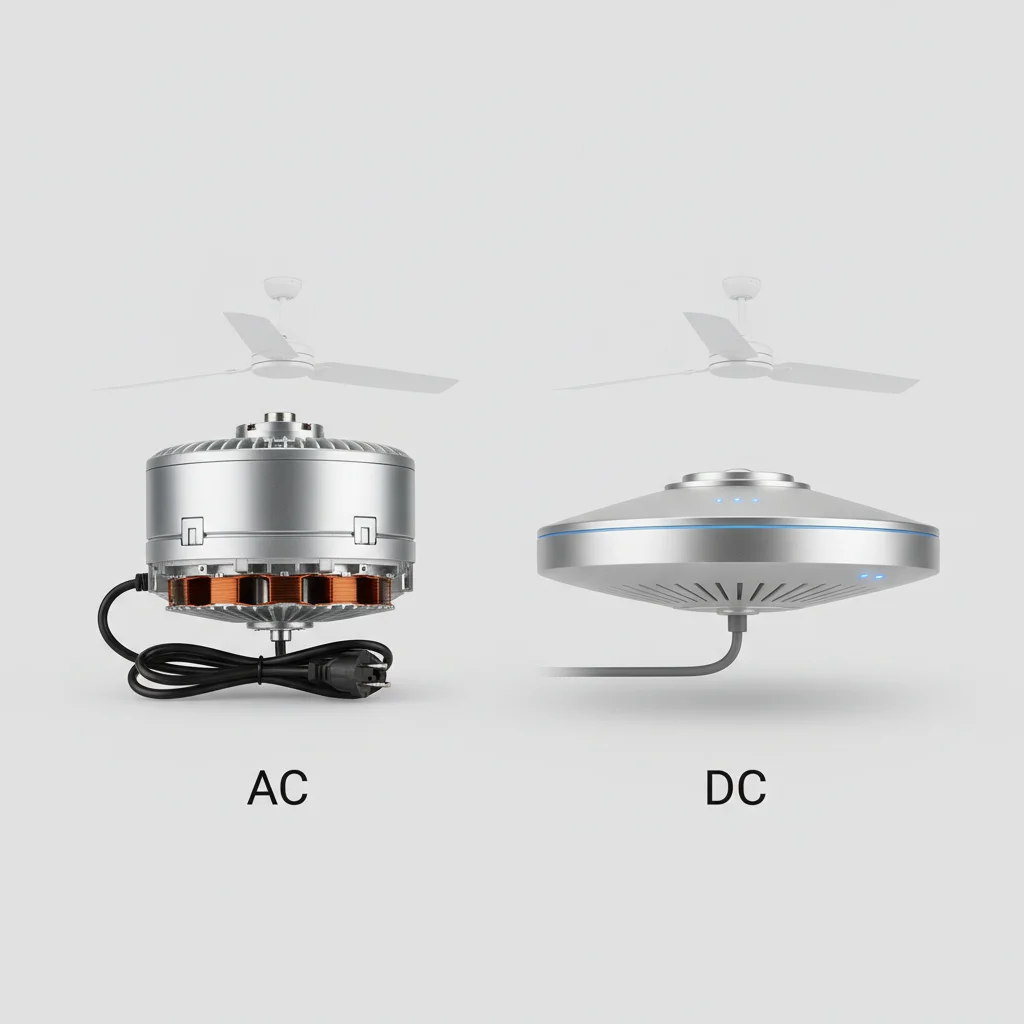
When choosing a new ceiling fan, understanding the differences between AC (alternating current) and DC (direct current) motors is crucial for long-term efficiency and performance. DC motors generally offer superior energy efficiency, quieter operation, and more advanced control options compared to AC motors, leading to significant savings on energy bills and a more comfortable living environment. This distinction is key for informed purchasing decisions.
AC Ceiling Fan Motors: The Traditional Choice
AC motors have been the standard for ceiling fans for decades, operating directly from a home’s alternating current power supply without needing a converter. This simplicity often results in a lower initial purchase price for AC-powered fans. However, AC motors typically consume more energy, especially at lower speeds, and offer less precise speed control. They also tend to be bulkier and can generate more operational noise due to their design. For expert ceiling fans reviews on this site.
While reliable, AC motors offer fewer speed settings, usually three to five, and often lack the advanced features found in DC models. Their robust construction makes them durable, but the trade-off is often in energy consumption and the overall user experience. For budget-conscious buyers or those replacing an older unit without specific efficiency demands, AC fans remain a viable option.
DC Ceiling Fan Motors: Modern Efficiency
DC motors represent a significant advancement in ceiling fan technology. They operate on direct current, requiring an internal converter to change a home’s AC power into DC. This conversion process, while adding a small component, allows for much greater efficiency. DC motors consume up to 70% less energy than AC motors, making them an excellent choice for eco-conscious consumers and those looking to reduce utility costs.
Beyond energy savings, DC motors offer a host of other benefits. They are considerably quieter, often virtually silent, due to their brushless design and smoother operation. They also provide a wider range of speed settings, sometimes up to six or more, allowing for more precise control over airflow. Furthermore, DC fans are typically more compact and lighter, offering greater flexibility in design and installation. Many smart ceiling fans utilize DC motors for their enhanced control capabilities, including integration with home automation systems.
Key Differences in Performance and Features
|
Our Picks for the Best Ceiling Fan in 2026
As an Amazon Associate I earn from qualifying purchases.
|
||
| Num | Product | Action |
|---|---|---|
| 1 | Passky Ceiling Fans with Lights, 52 inch Sleek Ceiling Fan with Light and Remote Control, 3CCT, Dimmable, Reversible, Noiseless, Black Ceiling Fan for Bedroom, Living Room |

|
| 2 | Ceiling Fan with Light, 40" Black Flush Mount Ceiling Fans with Remote Control,3CCT Dimmable LED, ABS 5-Fan Blades,Reversible Motor,Quiet Low Profile Indoor fandeliers for Bedroom Living Room |
|
| 3 | Passky Ceiling Fans with Lights, 52 inch Flush Mount Ceiling fan with Remote Control, Low Profile Ceiling Fan for Bedroom, Farmhouse, Reversible, 3CCT, Dimmable, Noiseless DC Motor, Black |
|
| 4 | Amico Ceiling Fans with Lights, 42 inch Low Profile Ceiling fan with Light and Remote Control, Flush Mount, Reversible, 3CCT, Dimmable, Noiseless, Black Ceiling Fan for Bedroom, Indoor/Outdoor Use |
|
| 5 | 41" Black Low Profile Ceiling Fans with Lights and Remote, Modern Flush Mount Ceiling Fan Light with Quiet Reversible DC Motor for Bedroom Kitchen |
|
| 6 | 41 inch Ceiling Fans with Lights, Black Flush Mount Ceiling Fan with Remote, 3CCT, LED Dimmable, Reversible, 6 Fan Speeds, Quite Low Profile Ceiling Fan with Lights Modern Bedroom Kitchen Indoor |
|
| 7 | Ceiling Fans with Lights, 42 Inch Ceiling Fan with Light And Remote, 3CCT Flush Moun Low Profile Ceiling Fans, 6 Speed Noiseless LED Ceiling Fan, Black Ceilings Fan with Remote for Bedroom Living Room |
|
| 8 | ZMISHIBO Ceiling Fans with Lights and Remote, 19.7'' Low Profile Ceiling Fan, 3000-6000K Dimmable Modern Flush Mount LED Fan Light, 6 Wind Speeds, Black Fandelier Ceiling Fans for Bedroom |
|
| 9 | ZMISHIBO 52 Inch Ceiling Fan with Light, App&Remote Control, Flush Mount Low Profile, Dimmable 20W LED Light, Quiet Reversible Motor for Bedroom, Living Room, Apartment, Black |
|
| 10 | OJX Ceiling Fans with Lights, 52 inch Ceiling fan with Light and Remote/APP Control, 3CCT, Quiet DC Reversible, Dimmable, Modern Ceiling Fan for Bedroom, Living Room, Kitchen, Indoor/Outdoor Use |
|
The performance gap between AC and DC motors extends beyond just energy consumption. DC motors excel in providing a broader spectrum of features and a more refined user experience. For instance, the ability to fine-tune fan speed with a DC motor allows for optimal comfort in various conditions, from a gentle breeze to a powerful airflow. AC motors, with their limited speed options, can sometimes feel too fast or too slow for specific preferences.
Another notable difference is the size and weight. DC motors are inherently smaller and lighter, which gives manufacturers more freedom in designing sleek, modern fan styles. This can be a significant factor for those with specific aesthetic requirements or limited installation space. The reduced weight also simplifies the installation process for many homeowners.
Installation and Maintenance Considerations
From an installation standpoint, both AC and DC ceiling fans generally follow similar procedures, though DC fans might have slightly different wiring for their converters. However, the overall complexity is comparable. Maintenance for both types primarily involves routine cleaning of blades and housing. Neither motor type typically requires specialized maintenance beyond what’s outlined in the manufacturer’s manual.
- DC motors offer up to 70% greater energy efficiency.
- AC motors are generally less expensive upfront.
- DC motors provide quieter operation.
- AC motors are often larger and heavier.
- DC motors allow for more precise speed control and smart features.
Making the Right Choice for Your Home
When deciding between an AC and DC ceiling fan, consider your priorities. If your primary concern is the lowest possible upfront cost and basic functionality, an AC fan might suffice. However, if you prioritize long-term energy savings, quiet operation, advanced control features, and a more modern design, a DC fan is undoubtedly the superior choice. The initial higher investment in a DC fan is often recouped through significant energy bill reductions over its lifespan, making it a smart financial and environmental decision in the long run.
Frequently Asked Questions
What is the main difference between AC and DC ceiling fan motors?
The main difference is how they use electricity. AC motors operate directly from your home's alternating current, while DC motors require an internal converter to change AC power into direct current, leading to greater efficiency.
Are DC ceiling fans more energy-efficient than AC fans?
Yes, DC ceiling fans are significantly more energy-efficient. They consume up to 70% less energy than AC motors, making them a better choice for reducing utility costs and environmental impact.
Do DC ceiling fan motors operate more quietly than AC motors?
Yes, DC ceiling fan motors are considerably quieter, often virtually silent. This is due to their brushless design and smoother operation compared to the typically bulkier and noisier AC motors.
What are the control benefits of DC ceiling fan motors?
DC motors offer a wider range of speed settings, sometimes six or more, allowing for more precise control over airflow. They also often integrate with smart home automation systems for enhanced control capabilities.
Is there a significant cost difference between AC and DC ceiling fans?
AC ceiling fans generally have a lower initial purchase price. However, the higher upfront investment in a DC fan is often recouped through significant energy bill reductions over its lifespan, making it a smart long-term financial decision.

The information about DC motors offering more precise speed control really sold me. My old fan only had three settings, but my new DC fan has so many options, I can really fine-tune the airflow. It’s made a huge difference in how comfortable my home feels throughout the day, without blasting air all the time.
I’ve been looking into new fans for my living room and the breakdown of AC vs. DC motors was really helpful. I ended up going with a DC fan for the energy savings, and it’s been great. The only minor complaint is that the remote control for the advanced speed options feels a little flimsy, but the fan itself performs wonderfully.
I finally upgraded my old ceiling fan to a DC motor model after reading about the efficiency differences. The quiet operation is a game-changer, especially in my bedroom. I used to hear the hum of my old AC fan all night, but this new one is practically silent. Definitely worth the slightly higher initial cost for the peace and quiet alone.
I bought an AC motor fan because the initial purchase price was much lower, which was important for my budget. It works fine for circulating air, but I do notice it’s a bit louder than I expected, especially on the higher settings. I guess you get what you pay for in terms of noise, but it still cools down the room.