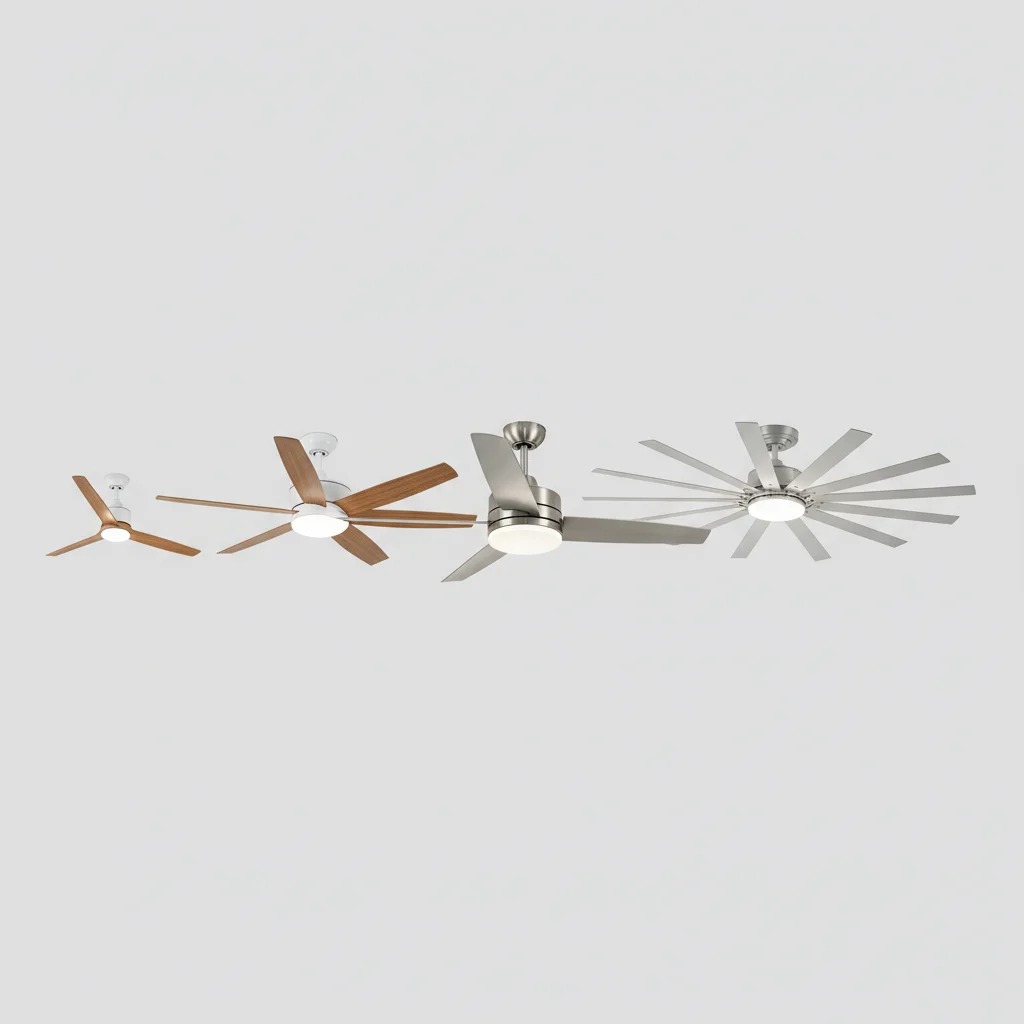
The ideal ceiling fan diameter for your room depends on its square footage. For rooms up to 75 square feet, a 29-inch to 36-inch fan is suitable. Medium rooms (76-144 sq ft) require a 36-inch to 48-inch fan, while large rooms (145-225 sq ft) need a 48-inch to 54-inch fan. Very large spaces over 225 square feet may benefit from a 54-inch or larger fan, or even multiple fans for optimal airflow and comfort.
Measuring Your Room for the Right Fan Size
Before selecting a fan, accurately measure the length and width of your room to calculate its square footage. This measurement is the most critical factor in determining the appropriate fan diameter. For instance, a room that is 10 feet by 12 feet has a total area of 120 square feet, placing it in the category for a 36-inch to 48-inch fan. Always round up if your room size falls between two categories to ensure adequate air circulation.
Consider the ceiling height as well. While not directly impacting diameter, very high ceilings might benefit from a slightly larger fan or a longer downrod to bring the fan closer to the living space, maximizing its effectiveness.
Understanding Fan Diameter and Airflow
The diameter of a ceiling fan refers to the total span of its blades from tip to tip. A larger diameter generally means the fan can move a greater volume of air, making it more effective in bigger rooms. However, it’s not just about size; blade pitch and motor strength also play significant roles in a fan’s airflow efficiency. A fan with a steeper blade pitch and a powerful motor can sometimes move as much air as a larger fan with less efficient design.
It’s important to balance the fan’s aesthetic with its functional purpose. An oversized fan in a small room can look disproportionate and create excessive air movement, while an undersized fan in a large room will struggle to provide adequate cooling.
Common Room Sizes and Recommended Fan Diameters
|
Our Picks for the Best Ceiling Fan in 2026
As an Amazon Associate I earn from qualifying purchases.
|
||
| Num | Product | Action |
|---|---|---|
| 1 | Passky Ceiling Fans with Lights, 52 inch Sleek Ceiling Fan with Light and Remote Control, 3CCT, Dimmable, Reversible, Noiseless, Black Ceiling Fan for Bedroom, Living Room |

|
| 2 | Passky Ceiling Fans with Lights, 52 inch Flush Mount Ceiling fan with Remote Control, Low Profile Ceiling Fan for Bedroom, Farmhouse, Reversible, 3CCT, Dimmable, Noiseless DC Motor, Black |
|
| 3 | Amico Ceiling Fans with Lights, 42 inch Low Profile Ceiling fan with Light and Remote Control, Flush Mount, Reversible, 3CCT, Dimmable, Noiseless, Black Ceiling Fan for Bedroom, Indoor/Outdoor Use |
|
| 4 | Ceiling Fans with Lights, 42 Inch Ceiling Fan with Light And Remote, 3CCT Flush Moun Low Profile Ceiling Fans, 6 Speed Noiseless LED Ceiling Fan, Black Ceilings Fan with Remote for Bedroom Living Room |
|
| 5 | Ceiling Fan with Light, 40" Black Flush Mount Ceiling Fans with Remote Control,3CCT Dimmable LED, ABS 5-Fan Blades,Reversible Motor,Quiet Low Profile Indoor fandeliers for Bedroom Living Room |
|
| 6 | OJX Ceiling Fans with Lights, 52 inch Ceiling fan with Light and Remote/APP Control, 3CCT, Quiet DC Reversible, Dimmable, Modern Ceiling Fan for Bedroom, Living Room, Kitchen, Indoor/Outdoor Use |
|
| 7 | 41 inch Ceiling Fans with Lights, Black Flush Mount Ceiling Fan with Remote, 3CCT, LED Dimmable, Reversible, 6 Fan Speeds, Quite Low Profile Ceiling Fan with Lights Modern Bedroom Kitchen Indoor |
|
| 8 | 41" Black Low Profile Ceiling Fans with Lights and Remote, Modern Flush Mount Ceiling Fan Light with Quiet Reversible DC Motor for Bedroom Kitchen |
|
| 9 | ZMISHIBO 52 Inch Ceiling Fan with Light, App&Remote Control, Flush Mount Low Profile, Dimmable 20W LED Light, Quiet Reversible Motor for Bedroom, Living Room, Apartment, Black |
|
| 10 | ZMISHIBO Ceiling Fans with Lights and Remote, 19.7'' Low Profile Ceiling Fan, 3000-6000K Dimmable Modern Flush Mount LED Fan Light, 6 Wind Speeds, Black Fandelier Ceiling Fans for Bedroom |
|
- Small Rooms (up to 75 sq ft): 29-36 inches
- Medium Rooms (76-144 sq ft): 36-48 inches
- Large Rooms (145-225 sq ft): 48-54 inches
- Great Rooms (over 225 sq ft): 54 inches or larger, or multiple fans
These recommendations serve as a general guideline. For irregularly shaped rooms, consider the primary area where air circulation is most needed. For example, in an L-shaped living and dining area, you might opt for two smaller fans rather than one very large one to ensure even coverage.
Special Considerations for Fan Placement
Beyond room size, think about the specific placement of the fan. If the fan is intended for a bedroom, you might prioritize a quieter model, regardless of size. For kitchens or outdoor patios, consider fans with damp or wet ratings, respectively, to withstand moisture and humidity. The fan should also be installed at least 7 feet above the floor for safety, and ideally 10-12 inches from the ceiling for optimal airflow, unless it’s a flush-mount design.
Always ensure there’s at least 18-24 inches of clearance from the fan blades to any walls or obstructions. This prevents air turbulence and allows the fan to operate at its maximum efficiency.This clearance is critical for both performance and safety, preventing potential damage to the fan or surrounding objects.
When to Consider Multiple Fans
For very large open-concept spaces, or rooms exceeding 400 square feet, a single ceiling fan may not be enough to provide comfortable air circulation throughout the entire area. In such cases, installing two or more smaller to medium-sized fans can be more effective than one massive fan. This approach allows for more even air distribution and often offers greater flexibility in controlling airflow in different zones of the room.When planning for multiple fans, ensure they are spaced appropriately to avoid creating conflicting air currents, which can reduce overall efficiency.
Frequently Asked Questions
How do I determine the right ceiling fan size for my room?
To determine the right ceiling fan size, measure your room's length and width to calculate its square footage. For example, a 10x12 foot room (120 sq ft) typically needs a 36-inch to 48-inch fan. Always round up if your room size falls between two recommended categories.
What fan diameter is recommended for a small room?
For small rooms up to 75 square feet, a ceiling fan with a diameter between 29 and 36 inches is generally recommended. This size provides sufficient air circulation without overwhelming the space.
Can ceiling height affect the choice of fan size?
Yes, ceiling height can affect fan effectiveness. While it doesn't directly change the recommended diameter based on square footage, very high ceilings might require a longer downrod to bring the fan closer to the living area, maximizing its cooling efficiency.
When should I consider installing multiple ceiling fans?
You should consider installing multiple ceiling fans for very large open-concept spaces or rooms exceeding 400 square feet. This approach ensures more even air distribution and better overall comfort than a single, massive fan.
What clearance is needed between fan blades and walls?
For optimal performance and safety, ensure there is at least 18 to 24 inches of clearance from the fan blades to any walls or obstructions. This prevents air turbulence and allows the fan to operate at maximum efficiency.
Choosing the Right Ceiling Fan Size
Select the correct ceiling fan diameter for optimal airflow and comfort by measuring your room's square footage and considering other factors like ceiling height and placement.
Accurately measure the length and width of your room in feet. Multiply these two numbers to calculate the total square footage. This is the primary factor for determining fan size.
Use the following guidelines: up to 75 sq ft (29-36 inches), 76-144 sq ft (36-48 inches), 145-225 sq ft (48-54 inches), and over 225 sq ft (54 inches or larger, or multiple fans). Always round up if your room size falls between categories.
For high ceilings, use a longer downrod to bring the fan closer to the living space. Ensure the fan is installed at least 7 feet above the floor and has 18-24 inches of clearance from walls for safety and optimal airflow.

We have a small home office, probably about 8×9 feet, and I was looking for a fan that wouldn’t overpower the space. The recommendation for rooms up to 75 square feet needing a 29-inch to 36-inch fan was spot on. I got a 36-inch model and it’s just right. It keeps the air moving without being too much.
Our open-concept kitchen and dining area is huge, definitely over 225 square feet. I was considering one massive fan, but the suggestion about using multiple fans for very large spaces was a game-changer. We installed two 54-inch fans and the coverage is fantastic. It’s made a huge difference in keeping the whole area cool and comfortable.
I was so confused about what size fan to get for our living room, which is about 15×15 feet. The guide here really helped me figure out that we needed something in the 54-inch range. We ended up getting a 54-inch fan and it’s perfect! The airflow is amazing and it really makes a difference in how comfortable the room feels.
I followed the advice for my bedroom, which is around 10×12 feet, and got a 42-inch fan. It works okay, but I feel like the air circulation isn’t quite as strong as I hoped. Maybe I should have rounded up to a 48-inch like it suggested, even though my room was on the lower end of that category. It’s a bit noisy on the highest setting too.