Changing your ceiling fan’s direction is a simple, effective way to optimize home comfort and energy efficiency year-round. Most modern ceiling fans feature a reversible motor: a counter-clockwise rotation creates a cooling downdraft for summer, while a clockwise rotation at low speed generates an updraft to redistribute warm air in winter. This adjustment can reduce air conditioning costs by up to 30% and heating bills by as much as 15%.
This guide details the straightforward steps to adjust your ceiling fan’s direction, explaining the benefits of each setting. You’ll learn how to ensure your fan consistently enhances your indoor environment and maximizes energy savings throughout the year.
What is a Ceiling Fan and Why Direction Matters?
A ceiling fan is an electromechanical device suspended from the ceiling, featuring rotating blades that circulate air. Beyond its aesthetic appeal, its primary function is to enhance thermal comfort by creating airflow, making a room feel cooler or helping to distribute warmth more effectively. While often associated with summer cooling, modern ceiling fans offer dual functionality, extending their utility to colder months.
The history of ceiling fans dates back to the late 19th century, evolving from early belt-driven systems to the diverse, energy-efficient models available today, often incorporating lights and smart controls. Understanding how your fan operates, particularly its directional settings, is crucial for harnessing its full potential. The direction of the blade rotation dictates how air is moved within the room, directly influencing comfort levels and energy consumption.
Understanding Ceiling Fan Direction: Summer vs. Winter Modes
Properly utilizing your ceiling fan’s directional settings can dramatically improve your home’s comfort and energy efficiency throughout the year. Most modern ceiling fans are equipped with a reversible motor, allowing them to spin in two directions: counter-clockwise for summer and clockwise for winter. This simple change helps optimize air movement for different temperature needs.
By understanding these two distinct modes, you can ensure your ceiling fan is always working to complement your HVAC system and keep your energy bills in check. Adjusting the rotation is a quick task that yields continuous benefits, providing a noticeable difference in how you experience your living space.
Summer Mode (Counter-Clockwise)
In the warmer months, your ceiling fan should rotate counter-clockwise to create a refreshing downdraft. This action pushes air straight down, generating a cool breeze that evaporates moisture from your skin, leading to a wind-chill effect. Even if the room temperature remains the same, this sensation can make you feel several degrees cooler.
Operating your fan in summer mode allows you to potentially raise your air conditioning thermostat setting by a few degrees without sacrificing comfort, leading to significant energy savings. Many studies suggest that using a ceiling fan in this mode can reduce air conditioning costs by up to 30%. This makes it an eco-friendly and cost-effective strategy for staying comfortable during hot weather.
Winter Mode (Clockwise)
|
Our Picks for the Best Ceiling Fan in 2026
As an Amazon Associate I earn from qualifying purchases.
|
||
| Num | Product | Action |
|---|---|---|
| 1 | 41 inch Ceiling Fans with Lights, Black Flush Mount Ceiling Fan with Remote, 3CCT, LED Dimmable, Reversible, 6 Fan Speeds, Quite Low Profile Ceiling Fan with Lights Modern Bedroom Kitchen Indoor |

|
| 2 | ZMISHIBO 52 Inch Ceiling Fan with Light, App&Remote Control, Flush Mount Low Profile, Dimmable 20W LED Light, Quiet Reversible Motor for Bedroom, Living Room, Apartment, Black |
|
| 3 | Ceiling Fans with Lights, 42 Inch Ceiling Fan with Light And Remote, 3CCT Flush Moun Low Profile Ceiling Fans, 6 Speed Noiseless LED Ceiling Fan, Black Ceilings Fan with Remote for Bedroom Living Room |
|
| 4 | Ceiling Fan with Light, 40" Black Flush Mount Ceiling Fans with Remote Control,3CCT Dimmable LED, ABS 5-Fan Blades,Reversible Motor,Quiet Low Profile Indoor fandeliers for Bedroom Living Room |
|
| 5 | Passky Ceiling Fans with Lights, 52 inch Sleek Ceiling Fan with Light and Remote Control, 3CCT, Dimmable, Reversible, Noiseless, Black Ceiling Fan for Bedroom, Living Room |
|
| 6 | Amico Ceiling Fans with Lights, 42 inch Low Profile Ceiling fan with Light and Remote Control, Flush Mount, Reversible, 3CCT, Dimmable, Noiseless, Black Ceiling Fan for Bedroom, Indoor/Outdoor Use |
|
| 7 | 41" Black Low Profile Ceiling Fans with Lights and Remote, Modern Flush Mount Ceiling Fan Light with Quiet Reversible DC Motor for Bedroom Kitchen |
|
| 8 | Passky Ceiling Fans with Lights, 52 inch Flush Mount Ceiling fan with Remote Control, Low Profile Ceiling Fan for Bedroom, Farmhouse, Reversible, 3CCT, Dimmable, Noiseless DC Motor, Black |
|
| 9 | ZMISHIBO Ceiling Fans with Lights and Remote, 19.7'' Low Profile Ceiling Fan, 3000-6000K Dimmable Modern Flush Mount LED Fan Light, 6 Wind Speeds, Black Fandelier Ceiling Fans for Bedroom |
|
| 10 | OJX Ceiling Fans with Lights, 52 inch Ceiling fan with Light and Remote/APP Control, 3CCT, Quiet DC Reversible, Dimmable, Modern Ceiling Fan for Bedroom, Living Room, Kitchen, Indoor/Outdoor Use |
|
During colder seasons, reverse your ceiling fan to spin clockwise at a low speed. In this mode, the blades create an updraft, gently pulling cooler air from below and pushing warm air, which naturally rises and collects near the ceiling, down along the walls. This process helps to redistribute heat more evenly throughout the room.
The goal in winter is to circulate warm air without creating a direct breeze, which would have a cooling effect. By moving the trapped warm air back into the living space, your heating system doesn’t have to work as hard, potentially lowering your heating bills by as much as 15%. This subtle, continuous circulation ensures that warmth is utilized efficiently, making your home feel cozier.
Step-by-Step Guide to Changing Your Ceiling Fan Direction
Changing the direction of your ceiling fan is a straightforward task that typically takes only a few minutes. However, it requires careful attention to safety and a basic understanding of your fan’s components. Properly reversing your fan’s rotation for the season can enhance your comfort and contribute to noticeable energy savings.
Follow these clear, concise steps to safely and effectively switch your ceiling fan between summer and winter modes. Ensuring each step is completed correctly will help prevent any damage to the fan and ensure its optimal performance in either direction.
Safety First: Preparation Steps
Before you attempt to change your ceiling fan’s direction, prioritizing safety is paramount. Working with electrical appliances requires caution to prevent injury or damage. Always take the necessary precautions to ensure a secure environment.
Begin by turning off the power to the ceiling fan at both the wall switch and, ideally, at the circuit breaker for added security. Once the power is off, wait for the fan blades to come to a complete stop before proceeding. This prevents accidental contact with moving parts and ensures the fan’s motor is entirely disengaged. You may also need a sturdy step stool or ladder to comfortably reach the fan’s motor housing.
Locating the Reversing Switch
Most ceiling fans come equipped with a small reversing switch located on the motor housing. This switch is typically a small toggle or slider, sometimes discreetly placed to blend with the fan’s design. Its position can vary, often found on the side of the motor or, in some cases, on the top or inside the switch housing.
Once you have safely turned off the fan and allowed the blades to stop, use your ladder or step stool to reach the motor. Carefully examine the body of the fan where the blades attach to locate this switch. It might be labeled with arrows or “Summer/Winter” indicators. Flip this switch firmly to the opposite position to change the fan’s direction.
Using the Remote or Wall Control
Many modern ceiling fans offer the convenience of remote control or a dedicated wall control for changing direction. If your fan has one of these features, you may not need to climb a ladder to access a physical switch on the motor housing. This simplifies the process, making seasonal adjustments much easier.
For remote-controlled fans, look for a “reverse” button or a specific fan icon that, when pressed and held, indicates a change in direction. Similarly, some wall controls include a toggle or button specifically for reversing the blade rotation. Always refer to your fan’s user manual for precise instructions if you’re unsure about your model’s specific controls.
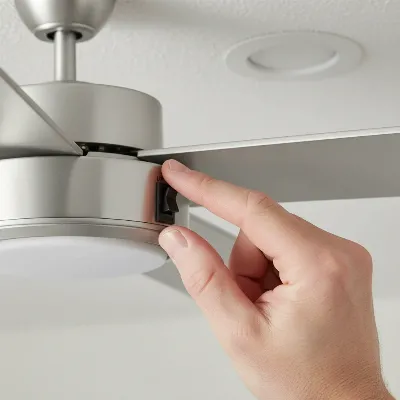 A person’s hand reaching up to flip a small reverse switch on a ceiling fan’s motor housing
Testing the New Direction
After you have located and flipped the reversing switch or used your remote/wall control, it’s time to test if the fan is rotating in the desired direction. First, ensure you are safely away from the fan blades before restoring power. Step down from your ladder or stool and turn the fan back on using the wall switch.
Start the fan on a low speed. To confirm the direction, observe the rotation of the blades. For summer mode, the blades should spin counter-clockwise, creating a noticeable downward breeze. For winter mode, they should rotate clockwise, producing an updraft with no direct breeze felt beneath the fan. If the direction is incorrect, simply repeat the steps to flip the switch again.
Common Issues and Troubleshooting When Changing Fan Direction
While changing your ceiling fan’s direction is usually a simple process, you might occasionally encounter minor issues. Knowing how to troubleshoot these common problems can save you time and prevent unnecessary frustration, ensuring your fan functions correctly throughout the year.
Most issues are easily resolved by re-checking the switch position or addressing minor electrical concerns. However, it’s important to recognize when professional assistance might be needed, especially for older models or persistent problems.
Fan Not Reversing
If your ceiling fan doesn’t reverse direction after flipping the switch, the most common culprit is often the switch itself not being fully engaged. The reversing switch on the motor housing can sometimes get stuck in a neutral position between the two settings. Ensure the switch is firmly pushed all the way to one side or the other, not lingering in the middle.
Another reason could be that the fan is still under power when you try to change the direction. Always turn off the fan and wait for the blades to completely stop before toggling the switch. For fans with remote controls, check the remote’s batteries or ensure you are using the correct button and holding it for the specified duration. In older fans, a faulty capacitor or a worn-out switch might be the cause, potentially requiring professional repair or replacement.
Fan Making Noise After Change
Occasionally, a ceiling fan might develop a humming or clicking noise after its direction has been changed. This can be unsettling, but it’s often a minor issue. One possibility is that the components have settled slightly differently after the change, leading to new vibrations. Ensure all screws on the blade brackets and the motor housing are tight.
Loose mounting hardware can also contribute to noise. If the sound persists, turn off the fan and inspect the blades for any dust buildup, as uneven weight can cause wobbling and noise. Cleaning the blades thoroughly can often resolve this. If the noise is significant or accompanied by wobbling, consult your fan’s manual or a qualified electrician.
Switch is Stuck
A stiff or stuck reversing switch can be a frustrating obstacle when trying to change your fan’s direction. Over time, dust, dirt, or lack of use can cause the switch to become difficult to move. Before forcing it, try gently wiggling the switch back and forth a few times to loosen any accumulated debris.
For very stubborn switches, you might carefully apply a small amount of electrical contact cleaner. Ensure the fan is completely powered off and unplugged before using any sprays. If the switch remains unresponsive or feels brittle, it might be damaged internally and require replacement. In such cases, it’s advisable to contact a professional electrician to avoid further damage to the fan’s motor or wiring.
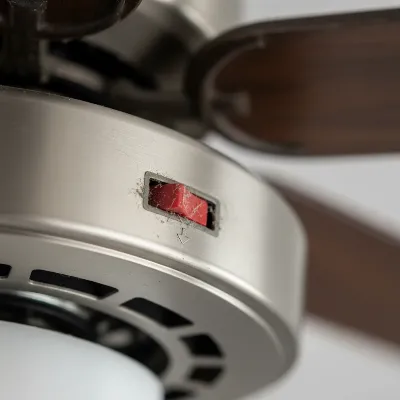 Close-up of a ceiling fan’s direction switch, emphasizing a stuck or faulty appearance
When to Change Your Ceiling Fan Direction?
Knowing when to adjust your ceiling fan’s direction is key to maximizing its benefits throughout the year. The most effective times to make this change coincide with significant shifts in outdoor temperatures, typically at the beginning of the cooling and heating seasons. This proactive approach ensures your home remains comfortable and your energy consumption stays optimized.
Making these seasonal adjustments not only enhances indoor climate control but also helps reinforce good habits for energy management. It’s a simple, manual task that yields continuous rewards in comfort and cost savings.
Seasonal Changes
The most obvious time to change your ceiling fan’s direction is at the transition between seasons. As spring turns to summer and temperatures begin to rise, you’ll want to switch your fan to counter-clockwise rotation to create that cooling downdraft. This mode is ideal for providing relief from heat and humidity, reducing your reliance on air conditioning.
Conversely, when autumn gives way to winter and the weather turns cold, it’s time to reverse the fan to clockwise rotation. This will help gently circulate the warm air that accumulates near the ceiling, pushing it back down into the living space. By making these seasonal switches, you effectively improve your ceiling fan into a year-round climate control assistant.
Personal Comfort Preferences
Beyond strict seasonal changes, your personal comfort preferences should also guide when you adjust your ceiling fan’s direction. Every home and individual has unique heating and cooling needs, and room temperatures can fluctuate based on factors like insulation, sunlight exposure, and occupancy.
If you find yourself feeling too warm even on a mild day, or if certain areas of your home feel consistently chilly, experiment with your fan’s direction. For instance, in a room that receives a lot of afternoon sun, you might opt for the summer (counter-clockwise) setting earlier in the spring or later into the fall. The goal is to create an environment that feels just right for you and your family, allowing the fan to efficiently augment your home’s thermal management.
Maximizing Energy Efficiency with Proper Fan Direction
Utilizing your ceiling fan’s directional settings correctly is a simple yet powerful strategy for enhancing your home’s energy efficiency. This small adjustment can significantly impact your monthly utility bills by reducing the workload on your heating and cooling systems. By understanding how to harness the fan’s full potential, you contribute to both environmental sustainability and financial savings.
Implementing proper fan direction allows your HVAC system to operate more efficiently, as the fan helps distribute conditioned air more effectively. This synergy ensures you maintain optimal comfort levels without excessive energy consumption, proving that sometimes the smallest changes yield the biggest benefits.
Saving on Heating/Cooling Costs
A properly directed ceiling fan can lead to substantial savings on both heating and cooling costs. In summer, the counter-clockwise rotation creates a wind-chill effect, making you feel cooler without actually lowering the room’s temperature. This allows you to set your air conditioner thermostat a few degrees higher, potentially saving up to 30% on cooling expenses.
During winter, the clockwise rotation at a low speed gently redistributes warm air trapped near the ceiling. This helps your heating system warm the living space more effectively, allowing you to lower your thermostat setting. This can translate to an average saving of 15% on heating bills. “Utilizing a ceiling fan efficiently is one of the easiest ways to shave dollars off your energy bills without sacrificing comfort.” – Sarah Chen, Energy Efficiency Consultant. These consistent savings accumulate over time, making directional changes a smart financial move.
Complementing HVAC Systems
Ceiling fans are not meant to replace your home’s heating, ventilation, and air conditioning (HVAC) system, but rather to complement it. When used in conjunction with your thermostat, a correctly directed ceiling fan can enhance the performance of your HVAC unit. In summer, the downdraft helps your AC circulate cool air more widely, reducing hot spots and allowing your AC to cycle less frequently.
In winter, the updraft prevents warm air from stratifying at the ceiling, ensuring heat is distributed throughout the room. This means your furnace or heat pump can achieve the desired temperature with less effort. By creating more uniform temperatures, ceiling fans allow your HVAC system to operate at optimal efficiency, reducing wear and tear while maintaining consistent comfort levels throughout your home.
Conclusion
Adjusting your ceiling fan’s direction seasonally is a simple, yet highly effective way to enhance comfort and achieve significant energy savings in your home. By switching to counter-clockwise rotation in summer and clockwise in winter, you optimize air movement to either cool your skin or redistribute warm air, taking pressure off your heating and cooling systems. This small, consistent action can lead to noticeable reductions in your utility bills, making your home more efficient year-round.
Don’t underestimate the power of this easy adjustment. Take a moment to check your ceiling fan’s direction today and ensure it’s set for the current season. You’ll not only enjoy a more comfortable living environment but also contribute to a greener planet and a healthier wallet. How often do you to change your ceiling fan’s direction?
Frequently Asked Questions
How do I know if my ceiling fan is spinning clockwise or counter-clockwise?
To determine the direction, stand directly under the fan and observe the blades as they spin. If the blades appear to be moving from top-right to bottom-left, pushing air down, it’s spinning counter-clockwise (summer mode). If they move from top-left to bottom-right, pulling air up, it’s clockwise (winter mode). You can also feel for a direct breeze beneath the fan; if you feel one, it’s likely in summer mode.
Can all ceiling fans change direction?
Most modern ceiling fans are equipped with a reversible motor that allows for directional changes. However, some older models or very basic fans may not have this feature. Look for a small toggle switch on the motor housing, a button on your remote control, or a specific setting on a wall control to confirm if your fan is reversible. If no such switch or control is found, your fan likely cannot change direction.
Frequently Asked Questions
How do I know if my ceiling fan is spinning clockwise or counter-clockwise?
To determine the direction, stand directly under the fan and observe the blades. If they appear to move from top-right to bottom-left, pushing air down, it's counter-clockwise (summer mode). If they move from top-left to bottom-right, pulling air up, it's clockwise (winter mode). A direct breeze beneath the fan indicates summer mode.
Can all ceiling fans change direction?
Most modern ceiling fans are equipped with a reversible motor for directional changes. However, some older or basic models may lack this feature. Check for a small toggle switch on the motor housing, a button on your remote control, or a specific setting on a wall control to confirm if your fan is reversible.
What are the energy savings from changing ceiling fan direction?
Changing your ceiling fan's direction can lead to significant energy savings. In summer, counter-clockwise rotation can reduce air conditioning costs by up to 30%. During winter, clockwise rotation at a low speed can lower heating bills by as much as 15% by redistributing warm air more effectively.
When is the best time to change my ceiling fan's direction?
The most effective times to change your ceiling fan's direction are at the beginning of the cooling and heating seasons. Switch to counter-clockwise in spring as temperatures rise for a cooling downdraft, and reverse to clockwise in autumn as the weather turns cold to circulate warm air.
What should I do if my ceiling fan doesn't reverse direction?
If your ceiling fan doesn't reverse, first ensure the reversing switch on the motor housing is fully engaged and not stuck in a neutral position. Always turn off the fan and wait for the blades to stop completely before toggling the switch. For remote-controlled fans, check batteries or ensure the correct button is used.

I always just left my ceiling fan on the same setting year-round, but after reading about the benefits of changing the direction, I finally tried it. Switching to the clockwise rotation for winter has made a noticeable difference in how warm our living room feels without cranking up the heat. It’s amazing how such a simple adjustment can really help with energy savings.
I’ve always known about reversible motors but never fully understood the ‘why’ behind it. This explanation of how a clockwise rotation at low speed helps redistribute warm air in winter was super clear. I’ve implemented it in our bedroom, and it definitely feels cozier. It’s a small change that makes a big impact on comfort.
This is a fantastic reminder about optimizing home comfort. I’ve been diligent about changing my fan’s direction for years, and it truly makes a difference in our energy bills. The point about reducing heating bills by as much as 15% is spot on. Everyone should be doing this; it’s such an easy way to improve your indoor environment.
The guide was helpful for understanding why fan direction matters. I tried changing my fan to counter-clockwise for summer, and while it does create a good downdraft, my older fan’s switch is really stiff and hard to reach. I wish there was an easier way to adjust it without needing a ladder every time. Still, the concept of reducing AC costs by up to 30% is appealing.